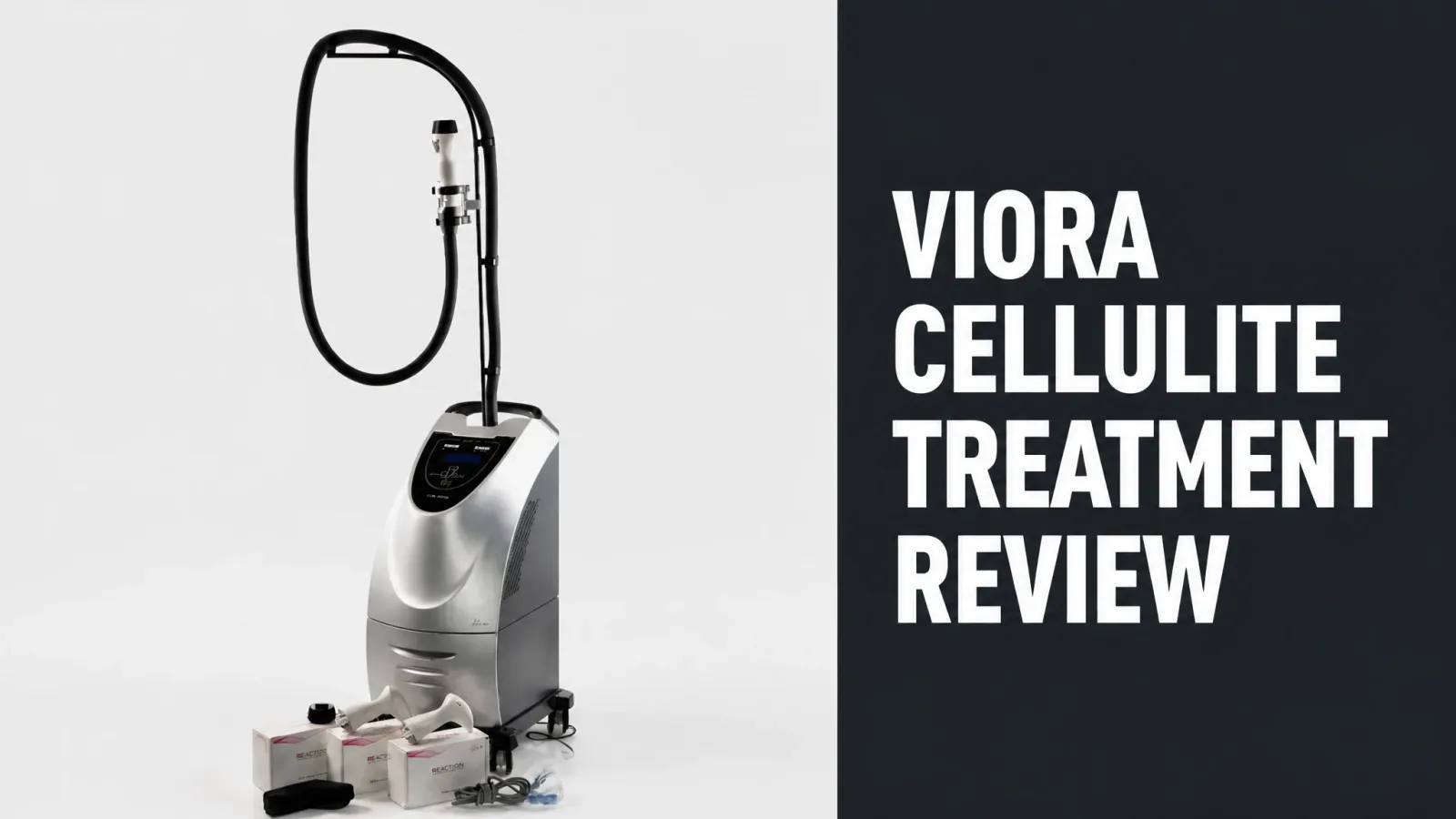
Viora Reaction is a non-invasive device that uses radiofrequency energy and vacuum suction to reduce cellulite, tighten skin, and treat wrinkles across the face, neck, abdomen, thighs, arms, buttocks, and knees, all without surgery, needles, or any real downtime required.
Clinics rely on vacuum suction to deepen radiofrequency penetration, then let the resulting heat trigger new collagen production over several weeks. Reviews split between patients who saw real smoothing after a full 8 to 9 session course and others who felt results faded fast without maintenance. This guide compares Viora against Venus Legacy and VelaShape.
One treatment rarely tells the whole story on its own, no matter how advanced the technology sounds. Our team at Optimal Weight Plan breaks down what the science, the pricing, and real patient reviews actually say, so you walk into any consultation knowing exactly what to expect.
What Is Viora Reaction?
Viora Reaction is a non-invasive device that uses radiofrequency and vacuum suction to reduce cellulite, tighten skin, and treat wrinkles. Providers use it on the face, neck, abdomen, thighs, arms, buttocks, and knees, all without surgery or a single needle involved. Sessions require no anesthesia of any kind.
In plain English: it's a heat-and-suction machine built to smooth skin without an operating room. The treatment targets adults who want a non-surgical option for cellulite, sagging skin, and stretch marks.
Here's what no one tells you upfront: you can't buy this device yourself. Licensed providers deliver every session at a clinic. Med spas, dermatology practices, and plastic surgery offices run the machine, not patients at home.
How Does Viora Cellulite Treatment Work?
The Viora applicator delivers bipolar and multi-polar radiofrequency energy that heats the dermis and subcutaneous fat layer beneath it. This heat softens the tissue and prepares it for the collagen-building process that follows over several weeks of ongoing treatment.
Let me break that down: vacuum suction pulls skin into the applicator during each pass. This action improves how deeply the radiofrequency energy penetrates while stimulating lymphatic drainage.
And here's the part that matters most: heated tissue boosts local circulation throughout the treatment area. This increased blood flow helps the body flush broken-down fat cells naturally over time.
What Technology Does Viora Use?
Viora markets its platform as a combination of Bi-Polar and Multi-Polar radiofrequency paired with vacuum therapy in one interchangeable applicator system. The same manufacturer also makes the V-Form and V-IPL systems used for other skin rejuvenation goals across many clinics.
An aesthetic device company backs the technology behind Viora Reaction. This company supplies units directly to licensed clinics rather than selling to consumers.
Here's how it stays flexible: providers adjust applicator heads and energy settings for each patient. This customization tailors the treatment to the specific area and skin type being addressed.
Why Do People Choose Viora for Cellulite?
Most patients want a non-surgical way to reduce cellulite dimpling and tighten skin without booking an operating room. Viora appeals to people who want visible change without a scalpel, general anesthesia, or a lengthy recovery window at home afterward. Many hear about it first through a friend or a clinic's social page.
Zero downtime sets Viora apart from surgical cellulite procedures. So what does that mean for you? You can book a lunch-break session and walk right back into your day.
Patients describe the sensation as a relaxing, warm treatment. That comfort factor is exactly why patients keep coming back for the full recommended series.
Does Viora Actually Reduce Cellulite?
Yes. Clinics report visible cellulite and circumference reduction after patients complete 8 to 9 treatments scheduled one week apart. The degree of change depends heavily on skin elasticity and how severe the cellulite looked before treatment began in the first place.
Results vary from patient to patient. And to be clear, severity of cellulite, skin quality, and how closely you follow the session schedule all shape the final outcome.
Many patients notice smoother skin gradually across the multi-week series. Few reviewers report dramatic change after just one or two sessions alone. Does that mean it's not worth trying? Not necessarily, it just means patience matters here.
Does Viora Tighten Skin at the Same Time?
Yes. Viora Reaction is also marketed for skin tightening, wrinkle reduction, and stretch mark improvement across treated areas. All of these effects trace back to the same radiofrequency heating mechanism inside the device's interchangeable applicator heads.
Collagen and elastin fibers respond to the applied heat. New fiber growth gradually firms the skin over the weeks following each session.
And it gets better: clinics apply Viora to the face and neck for tightening just as often as they apply it to the body for cellulite. Both use cases rely on the same underlying mechanism.
What Do Viora Reviews Say?
Patient reviews appear across clinic testimonial pages and third-party med spa review sections, painting a realistic picture of outcomes. These accounts give prospective patients a much clearer sense of what to expect before booking a first consultation.
Here's the thing: sentiment splits between two groups. Satisfied patients embraced gradual smoothing, while disappointed patients expected more dramatic change from a non-invasive device.
Provider marketing leans heavily on comfort and convenience. But clinics emphasize zero downtime and a relaxing session experience over dramatic transformation claims.
What Do Positive Reviews Highlight?
Satisfied patients describe the sessions as comfortable, warm, and easy to schedule around a normal workday. Many say the treatment feels closer to a spa visit than a clinical medical procedure at a busy hospital.
Visibly smoother skin and reduced dimpling appear after completing the full session series. This timeline matches what most clinics quote during the initial consultation.
Pros:
- No downtime or recovery period required
- Comfortable, relaxing session experience
- Customizable applicator heads for different areas
And here is the best part: many satisfied patients return for a maintenance session. A touch-up every few months keeps the smoothing effect from fading.
What Are the Common Complaints?
Unsatisfied patients report that results feel subtle and require the full multi-session course before becoming visible at all. This slower timeline frustrates patients who expected faster change from their very first appointment at the clinic.
The bad news? Smoothing fades without a periodic maintenance session. That ongoing commitment surprises some patients after the initial course ends.
Cons:
- Results require completing the full session course
- Smoothing fades without maintenance visits
- Change feels gradual rather than dramatic
Expectation gaps drive most negative reviews. Patients hoping for fast, dramatic cellulite removal end up disappointed by gradual, subtle improvement instead. Does that mean the treatment failed? Not really, it just means the marketing oversold the timeline.
Viora vs Venus Legacy vs VelaShape: How Does It Compare?
Viora combines bipolar and multi-polar radiofrequency with vacuum suction and interchangeable applicator heads for different treatment areas. Venus Legacy instead pairs radiofrequency with pulsed electromagnetic fields and its own VariPulse suction mechanism.
VelaShape takes a different approach. It combines radiofrequency, infrared light, and vacuum massage inside one fixed handpiece design. Here's a quick way to see it side by side:
| Device | Mechanism | Typical Sessions |
|---|---|---|
| Viora | Radiofrequency + vacuum + interchangeable heads | 8-9 |
| Venus Legacy | Radiofrequency + magnetic pulses + suction | 6-10 |
| VelaShape | Radiofrequency + infrared + vacuum | 6-8 |
All three devices share a similar profile. Each requires multiple sessions, carries minimal downtime, and produces gradual rather than immediate results.
What Happens During a Viora Session?
A technician selects an applicator head, applies gel, then moves the device over the treatment area in controlled, overlapping passes. This methodical movement spreads radiofrequency energy evenly across the entire target zone without overheating any single spot on the skin.
Each session runs between 20 and 40 minutes. Session length depends on the specific treatment area and how many zones need coverage.
What a Typical Session Looks Like:
- The technician cleanses the treatment area and applies conductive gel
- The applicator glides over the skin in slow, controlled passes
- The provider monitors skin warmth throughout the session
- The technician wipes away the gel once the session ends
Patients feel a warming sensation that signals collagen stimulation. No anesthesia or numbing cream is needed for comfort during the session.
How Many Sessions Does Viora Require?
Providers typically recommend 8 to 9 treatments scheduled about one week apart for cellulite and circumference reduction. This weekly spacing gives the skin's collagen network enough time to rebuild before the next scheduled appointment begins.
Maintenance sessions follow the initial course. Providers recommend scheduling one every few months to help preserve results long-term.
What Are the Side Effects of Viora?
Mild swelling and temporary redness appear in the treated area right after a session, along with a lingering warmth. Both effects typically fade within a few hours without any special aftercare needed at home afterward.
Here's what no one tells you: a noticeable warming sensation during treatment is expected. It signals collagen stimulation rather than a complication or a problem.
Downtime stays minimal compared with surgical alternatives. Patients typically resume normal activity right after leaving the treatment room.
Who Should Avoid Viora Treatment?
Pregnant patients should avoid radiofrequency-based Viora treatments for the full duration of pregnancy as a precaution. Most clinics decline pregnant patients outright since the safety profile for a developing fetus remains genuinely unclear.
Who Should Skip This Treatment:
- Patients who are pregnant
- Patients with a pacemaker or other implanted electronic device
- Patients with an active skin infection or open wound
- Patients with a history of poor wound healing in the treatment area
Pacemakers and other implanted devices create a clear contraindication. Radiofrequency energy can interfere with how these devices function.
Open wounds and active infections require postponement. Full healing must occur before a provider clears the area for treatment.
Is Viora Safe and FDA Cleared?
Yes. The FDA cleared Viora Reaction for temporary reduction in cellulite appearance and for non-invasive skin tightening treatments. This clearance covers the specific medical claims clinics can legally make about the device to any prospective patient.
Viora supplies its equipment to licensed medical and aesthetic clinics rather than selling directly to consumers. This distribution model adds a layer of oversight beyond a single provider's word.
Bottom line: trained providers following manufacturer protocols keep the risk profile low. Most reported side effects stay mild and temporary.
How Much Does Viora Cost?
A single session typically costs between $150 and $350, depending on the treatment area and the clinic's geographic location. Larger areas like the abdomen or full thighs sit at the higher end of that pricing range in most competitive markets.
Typical Viora Pricing:
- Single session: $150-$350
- Full 8-9 session package: $1,200-$3,000
- Maintenance session: similar to single-session pricing
A full 8 to 9 session package commonly runs $1,200 to $3,000 in total. The good news? Clinics often bundle sessions into a discounted package rate.
Geographic market and clinic type drive most of the price variation. A boutique med spa in a major city typically charges more than a suburban dermatology office.
Is Viora Worth the Price?
Viora costs less than surgical cellulite procedures, but more than simple at-home massage tools and topical creams. That middle position in the market shapes how most patients ultimately judge its overall long-term value proposition.
Satisfied patients consider the price reasonable. Zero downtime and gradual, natural-looking improvement justify the spend for this group.
Disappointed patients reach a different conclusion. So what tips the scale? Mostly whether the visible results matched what the clinic promised at the consultation.
Where Can You Get Viora Treatments?
Viora Reaction remains available only through licensed medical spas, dermatology practices, and plastic surgery clinics nationwide. No consumer or at-home version of this device exists anywhere on the market today, according to the manufacturer itself.
A home unit can't be purchased under any circumstance. Booking a session always starts with a clinic consultation first.
Here's the good part: many practices offer a free initial consultation. Financing plans commonly help patients spread the cost of a full session package over time.
Is Optimal Weight Plan Worth Trying for Your Cellulite Goals?
A single treatment rarely solves the full picture on its own, no matter how advanced the technology sounds. Our team at Optimal Weight Plan pairs research like this with real coaching on nutrition, movement, and body composition, so results from a device like Viora actually stick for the long run.
Our coaches help you set realistic expectations before you spend a dollar on any clinic package. And here is the best part: a personalized plan targets the habits driving cellulite in the first place, not just its surface appearance.
Ready for a plan that goes beyond one treatment? Talk to Optimal Weight Plan today and build a strategy that supports your whole body, not just one problem area.