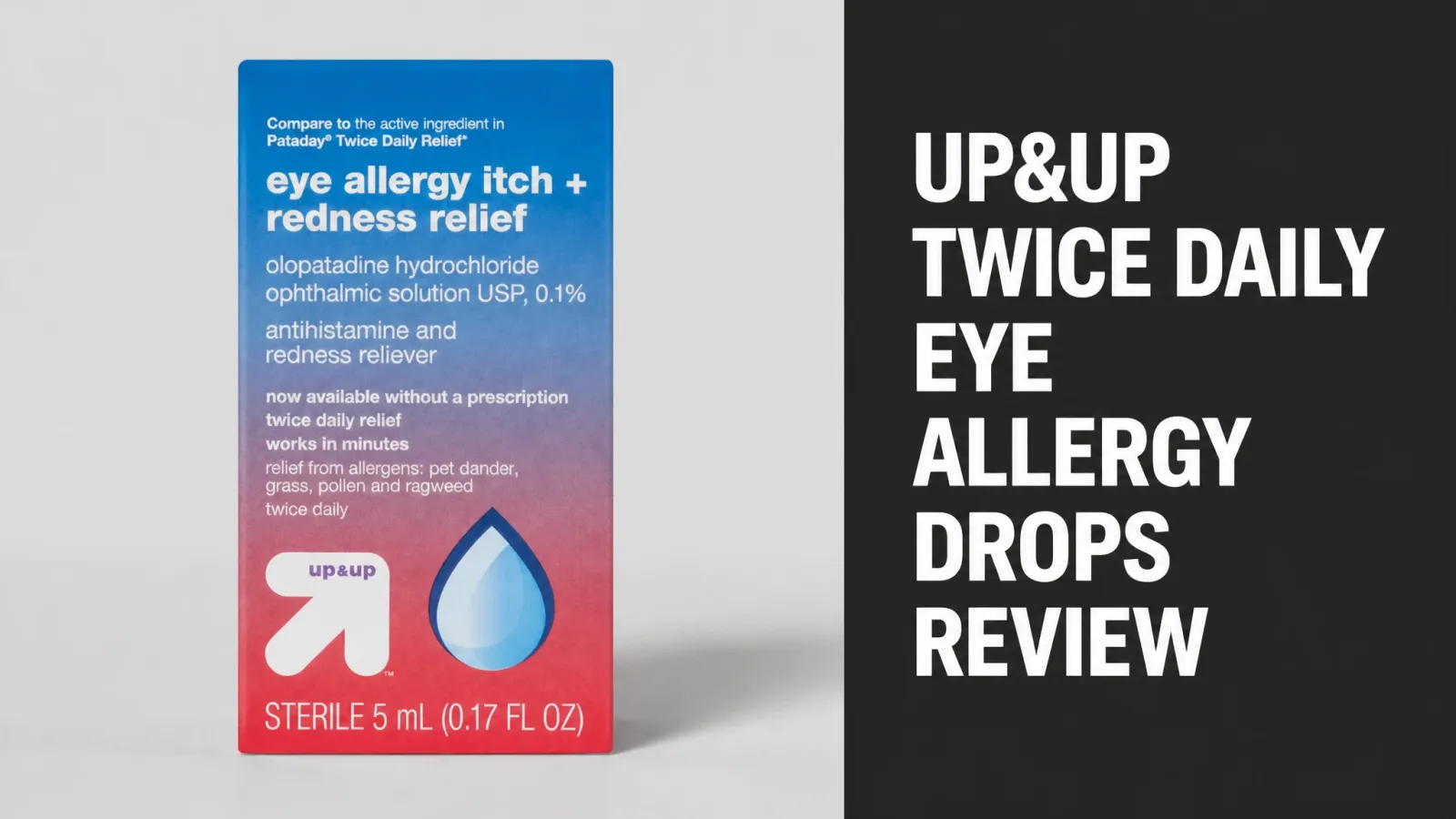
Up&up Twice Daily Eye Allergy Itch Relief is Target's store-brand allergy eye drop. The 5 mL bottle contains 0.1% olopatadine hydrochloride and sits beside Pataday on the shelf. So, is this up&up Twice Daily eye allergy drops review a story of smart savings or a risky swap?
The carton says the drops are 'compare to the active ingredient in Pataday Twice Daily Relief.' It promises relief from pet dander, grass, pollen, and ragweed. It also says the drops work in minutes and are now available without a prescription.
This review covers how the drops work, what the active ingredient does, and what to expect from reviews. You will also see side effects, who should skip them, how they compare to other allergy eye drops, and where to buy them.
What Is Up&Up Twice Daily Eye Allergy Itch Relief?
Up&up Twice Daily Eye Allergy Itch Relief is Target's store-brand antihistamine eye drop made with 0.1% olopatadine hydrochloride. The carton calls it an antihistamine and redness reliever. Each box holds one sterile 5 mL (0.17 fl oz) bottle.
Target sells the drops under its up&up house label. The brand copies the active ingredient and strength of a national name. That is why the carton points shoppers to Pataday Twice Daily Relief.
Up&Up Twice Daily Drops at a Glance:
| Detail | Info |
|---|---|
| Active ingredient | Olopatadine hydrochloride 0.1% |
| Drug type | Antihistamine and redness reliever |
| Bottle size | 5 mL (0.17 fl oz), sterile |
| Dosing schedule | Twice daily |
| Brand compared to | Pataday Twice Daily Relief |
| Seller | Target |
How Do the Drops Work?
Olopatadine blocks histamine and stops mast cells from releasing the chemicals that cause eye allergy symptoms. WebMD describes it as both a mast cell stabilizer and an antihistamine. Healthline notes that it stops mast cells from releasing histamines and leukotrienes.
Here's what that means in plain English. Pollen or pet dander lands on your eye. Your body floods the area with histamine. Olopatadine steps in, calms that reaction, and the itch fades.
How Fast Do They Work?
The carton claims the drops work in minutes. Our team could not find independent timing studies for this store brand. Cleveland Clinic says olopatadine reduces the release of allergy chemicals, which decreases inflammation in the eye. Individual results vary.
What Is the Active Ingredient in Up&Up Twice Daily Drops?
The active ingredient is olopatadine hydrochloride at a 0.1% strength. Olopatadine belongs to the antihistamine family. The same ingredient appears in Pataday, Patanol, and Pazeo, according to Mayo Clinic and Cleveland Clinic.
Strength matters here. Pataday sells three OTC strengths: 0.1%, 0.2%, and 0.7%. The 0.1% version is the twice-daily one. Target also sells a 0.2% once-daily up&up drop and a 0.7% extra strength version in separate boxes.
Olopatadine Strengths at a Glance:
| Strength | Schedule | Up&Up Version |
|---|---|---|
| 0.1% | Twice daily | Twice Daily, 5 mL |
| 0.2% | Once daily | Once Daily, 3.5 mL |
| 0.7% | Once daily | Extra Strength, 2.5 mL |
Do Up&Up Twice Daily Eye Drops Actually Work?
Yes, for itchy eyes caused by allergies. Olopatadine is a proven ingredient for allergic eye itching. Mayo Clinic says it treats eye itching from allergic conjunctivitis and from pollen, ragweed, grass, animal hair, and dander.
The store brand shares that ingredient and strength with Pataday Twice Daily. So the expected effect is the same. Our team did not find a head-to-head clinical trial of up&up against Pataday. The match rests on the shared active ingredient and the carton's own comparison.
Does It Treat Eye Redness Too?
The carton calls the product an antihistamine and redness reliever. It does that by calming the allergic reaction behind the redness. It is not a decongestant. Healthline notes olopatadine does not cause drowsiness.
What Do Up&Up Twice Daily Eye Drop Reviews Say?
Public review data for this exact box is thin. Our team could not read verified star ratings or review text for it from the sources we checked. Target's page lists a guest ratings section, but the text did not load for us. So we will not invent a score.
What Do Reviews of Olopatadine Drops Say?
WebMD runs a reviews section on olopatadine drops with 181 entries. Those cover the ingredient and brand-name versions, not this store box. The documented side effects, such as stinging and brief blurry vision, are listed below. Treat the ingredient's track record as a guide, not a verdict on this box.
What Should You Look for in Store-Brand Reviews?
Check Target's guest reviews for three things. Look for comments on how fast itching stops, how long relief lasts, and whether stinging bothered people. And read the newest ones first. Formulas and packaging change over time.
How Does It Compare to Pataday, Zaditor, and Alaway?
Up&up Twice Daily matches Pataday Twice Daily on the active ingredient but differs from Zaditor and Alaway, which use ketotifen. Ketotifen 0.025% is also a dual-action antihistamine. It is dosed twice daily, with relief lasting up to 12 hours, per a Cheyenne Eye Clinic roundup.
Lastacaft takes a different route. It uses alcaftadine and is dosed once a day. Cheyenne Eye Clinic reports it lasts 24 hours and lists prices from $10 to $30.
Allergy Eye Drops Compared:
| Product | Active Ingredient | Schedule | Reported Price |
|---|---|---|---|
| Up&up Twice Daily | Olopatadine 0.1% | Twice daily | Check Target |
| Pataday Twice Daily | Olopatadine 0.1% | Twice daily | Check retailer |
| Alaway | Ketotifen 0.025% | Twice daily | $12-$20 (10 mL) |
| Zaditor | Ketotifen 0.025% | Twice daily | $5-$25 |
| Lastacaft | Alcaftadine | Once daily | $10-$30 |
What Are the Side Effects of Up&Up Twice Daily Eye Drops?
Side effects are usually mild and stay in or around the eye. Healthline lists blurred vision, burning or stinging, dry eyes, an odd sensation in the eye, headache, and a change in taste. Mild effects often pass within days or a couple of weeks.
WebMD names common cold symptoms and sore throat as the most frequent effects. It also warns about rare serious allergic reactions. Stop using the drops and get help right away if you have trouble breathing or swelling of the face, lips, or tongue.
Stop use and call a doctor if you have eye pain, severe irritation, or a change in eyesight. Cleveland Clinic says the same for eyes that become swollen, painful, or start to discharge.
Can You Use the Drops With Contact Lenses?
Not while the lenses are in. The preservative benzalkonium chloride can be absorbed by soft lenses. Remove them first, then wait at least 10 minutes before putting them back. Do not use the drops to treat irritation caused by the lenses themselves.
Who Should Avoid Up&Up Twice Daily Eye Drops?
People allergic to olopatadine or to any ingredient in the drops should not use this product. Cleveland Clinic also asks pregnant and breastfeeding patients to speak with a care team first. Mayo Clinic says there are no adequate studies on infant risk during breastfeeding.
Check With a Doctor First If You:
- Are allergic to olopatadine or other eye drop preservatives
- Are pregnant or trying to get pregnant
- Are breastfeeding
- Wear soft contact lenses all day
- Are treating a child under 3 years old
Mayo Clinic says safety of olopatadine 0.1% has not been established in children younger than 3. Read the age line on your carton. Never touch the dropper tip to your eye or fingers, and keep the bottle tightly closed. If symptoms last longer than the label allows, see an eye doctor.
How Much Do They Cost and Where Can You Buy Them?
Target sells up&up Twice Daily Eye Allergy Itch Relief in stores and on Target.com. Delivery apps such as Instacart also list the olopatadine up&up drops. No prescription is needed. Prices change by store and week, so check the live listing.
Is It Worth the Price?
Store brands exist to undercut the national name while using the same active ingredient. That makes this a reasonable swap for most adults who already tolerate olopatadine. Compare the price per mL against Pataday Twice Daily and ketotifen options before you buy. Store the bottle between 39°F and 77°F (4°C to 25°C) unless the carton says otherwise.
Why Should You Try Optimal Weight Plan?
Allergy drops calm the itch. But here's the thing: allergy season can also knock your sleep, energy, and workouts off track. Weeks of poor rest make healthy eating harder.
Our coaches at Optimal Weight Plan build simple, realistic routines that keep you steady through rough seasons. Small habits around food, movement, and sleep add up fast.
Ready to feel better all year, not just on low-pollen days? Book a free call with our coaches and start a plan built around you.