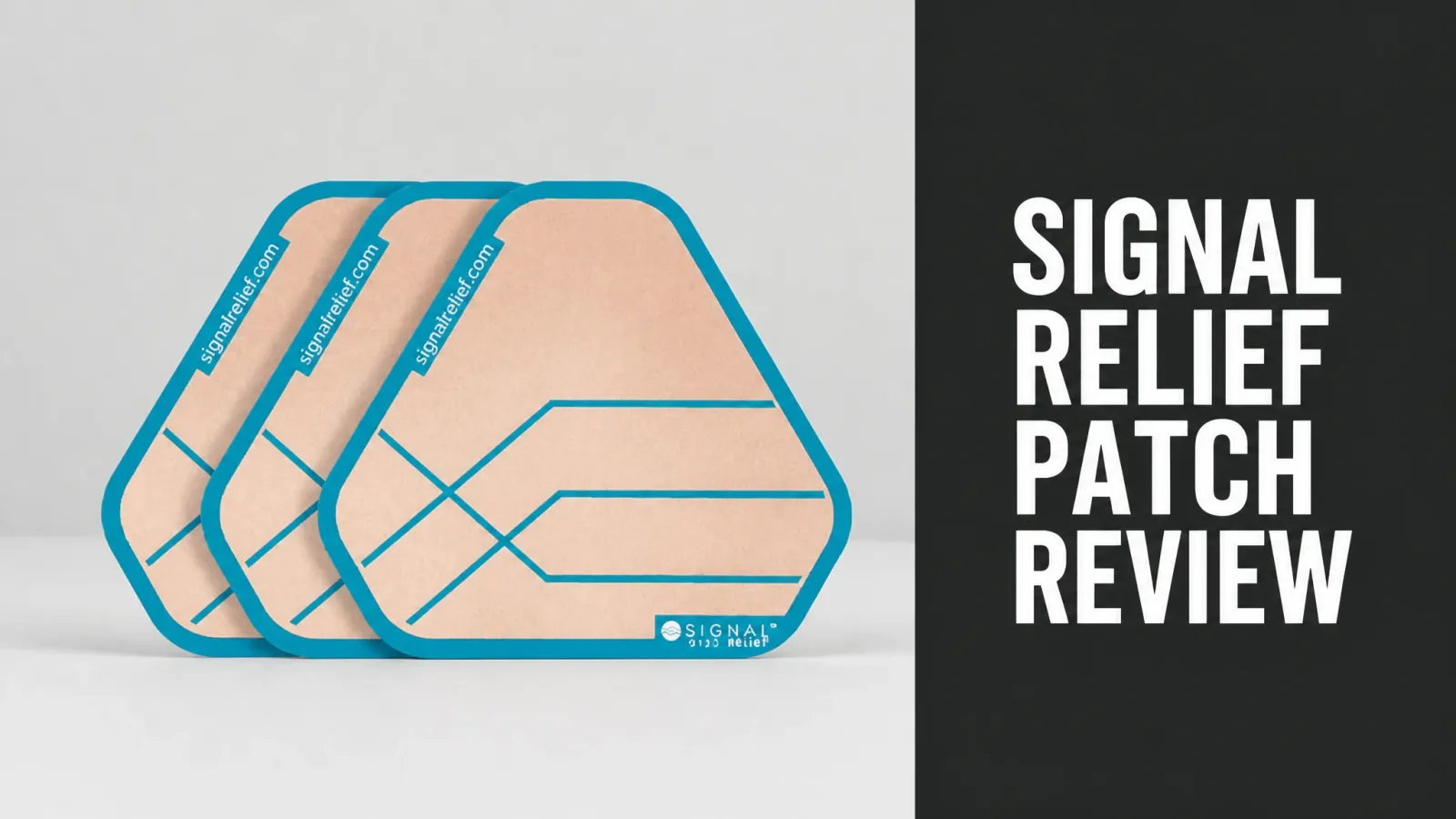
Signal Relief is a reusable, drug-free pain patch from a Provo, Utah company. It carries no drugs, wires, or batteries, and it sticks to the skin over the area that hurts. The brand sells it for back, knee, and foot discomfort.
A 2023 pilot study reported a 59.7% average drop in pain scores among 32 finishers. But ConsumerLab calls the human evidence weak, and Reddit threads call the patch a scam. Prices run from $143 to $239 on sale, which makes the question of proof matter.
So does a plastic-looking patch deserve that money? This review covers how the patch is said to work, the study numbers, real complaints, pricing, the refund rules, and who should avoid it.
What Is the Signal Relief Patch?
The Signal Relief patch is a thin, flexible, drug-free patch marketed for musculoskeletal pain. A conductive particle array sits inside it, and the maker calls that layer a bio-antenna. You wear it on the skin or over clothing.
Here's the thing: the company sells several formats. The 4.5 inch patch is the core product at $179 list price. Signal Core targets back discomfort, and Signal Step is a foot insert for foot discomfort.
What Products Does Signal Relief Sell?
Signal Relief sells three main products plus replacement adhesives. Each patch is built to last at least one year with proper care and carries a one-year warranty, according to the brand's FAQ.
Product Lineup:
- Signal Relief 4.5 inch Patch for everyday discomfort
- Signal Core for back discomfort
- Signal Step for foot discomfort
- Replacement adhesives sold separately
How Does the Signal Relief Patch Work?
The brand says the patch absorbs the body's natural electromagnetic energy to turn down pain signals. The conductive layer is said to reduce or interrupt the intensity of signals that reach the brain.
To be clear, this is the manufacturer's explanation. The 2023 pilot paper describes the patch as exploiting the body's natural electromagnetic field. No independent lab has confirmed that mechanism in the sources our team reviewed.
Use is simple. You peel the liner, stick the patch on the sore area, and leave it there. If the adhesive weakens, a damp cloth and drying time can restore some stickiness, and replacement adhesives cost extra.
Where Do You Place the Patch?
You place it directly over the painful spot. In the pilot study, seven people dropped out because the patch was hard to fix on the neck and shoulder. The authors said they were working on a more malleable design.
Flat areas such as the lower back and knee are easier. Curved areas are the weak point.
What Are the Benefits of the Signal Relief Patch?
The main appeal is a pain option with no pills, creams, or batteries. The patch is reusable, and the brand claims a lifespan of at least a year. That works out to the 30 cents per day figure the company advertises.
Look, the drug-free angle matters to many buyers. Chronic pain affects 20.4% of US adults, according to figures cited in the pilot paper, and many people want alternatives to daily pills.
Main Benefits:
- No drugs, wires, or batteries
- Reusable for a year or more
- 45 day money-back guarantee
- HSA and FSA eligible
Does the Signal Relief Patch Actually Reduce Pain?
Maybe, but the proof is thin. In the pilot study, 24 of 32 finishers (75%) had at least a 30% drop on a pain scale after seven days. The average drop was 59.7% on the visual analog scale.
Now watch this: the study had no placebo group, and 10 of 42 enrolled people were left out of the main analysis. Signal Relief staff are also listed among the authors. ConsumerLab summed up the evidence in people as weak.
Pilot Study Results:
| Measure | Result |
|---|---|
| Participants finishing | 32 of 42 |
| Pain scale (VAS) drop | 59.7% average |
| Brief Pain Inventory drop | 44% |
| Non-opioid medication use | 96.5% decrease |
| Adverse events | None reported |
Does the Signal Relief Patch Help Back Pain?
One 2025 case report in Pain Medicine Case Reports described a patient who wore the patch daily and had consistent 90% to 100% back pain relief. A single case cannot show the patch works for most people.
So what does that mean for you? Treat it as a hopeful signal, not proof.
What Do Signal Relief Patch Reviews Say?
Reviews split sharply. The brand's own site shows glowing testimonials, with a disclaimer that results vary. Independent forums lean skeptical, and the BBB lists complaints about rashes and refunds.
The bad news? Many testimonials sit on the seller's page, so they carry less weight than independent reports.
What Do Happy Customers Say About Signal Relief?
Happy users describe relief in the back, knees, and feet. A Reddit post titled 'Signal Relief patch working' came from someone who felt real improvement. Many testimonials mention that the relief arrived within minutes of wearing the patch.
Some buyers also like the long-term cost. One patch replaces repeated purchases of creams or pain pills.
What Are the Common Complaints About Signal Relief?
The loudest complaint is that the patch does nothing. One Reddit reply called it an unproven scam and described it as a plastic piece with a geometric design. A r/CrohnsDisease thread said most reviews it found called the patch a scam.
Skin rashes show up in BBB complaints. The company's reply offered a returnless refund when customers send photos of the rash and patch. Price also draws criticism, since the patch costs far more than a drugstore pain patch.
Pros:
- Drug-free and reusable
- 45 day money-back guarantee
- No adverse events in the pilot study
Cons:
- Weak independent evidence
- Pilot study had no control group
- High upfront price
- Hard to place on the neck and shoulder
Signal Relief vs LifeWave vs Lidocaine Patches
Signal Relief competes with two groups. One is other wearable patches such as LifeWave, which ConsumerLab also covers. The other is drugstore patches that use lidocaine or menthol, which have a long track record.
Comparison:
| Option | How It Works | Typical Cost |
|---|---|---|
| Signal Relief | Conductive layer, no drug | $143-$239 on sale |
| LifeWave patches | Wearable patch, no drug | Varies by pack |
| Lidocaine patches | Topical numbing drug | Low, single-use |
Here's the trade-off. Drugstore patches cost less up front but wear out after a day. Signal Relief costs more but is reusable, if it works for you.
What Are the Side Effects of the Signal Relief Patch?
The pilot study reported no adverse events. Still, skin irritation is the most common complaint in BBB records, and the patch sticks to skin with an adhesive. Remove it if redness, itching, or a rash appears.
Who Should Avoid the Signal Relief Patch?
The brand tells people to consult a physician before use if they have diabetes, circulatory problems, chronic pain, skin conditions, nerve disorders, or any implantable device. Pregnant women should not use it. The pilot study also excluded people with pacemakers and similar devices.
Talk to a Doctor First If You Have:
- A pacemaker, defibrillator, or other implant
- Diabetes or circulatory problems
- Nerve disorders or skin conditions
- A pregnancy
Is the Signal Relief Patch Legit?
Yes, the company is real, and it sells the product with a written refund policy. But legit does not mean proven. ConsumerLab rates the evidence for pain relief in people as weak, and the main trial came from a small pilot with company involvement.
Our team found no claim that the patch is an FDA-approved drug. The site also carries a notice that testimonials are not meant to claim the product treats or cures any disease. Buy it as a trial, not a cure.
How Much Does the Signal Relief Patch Cost?
List prices run from $179 to $299, though the site shows a 20% sale on most items. Free shipping applies on orders over $200.
Pricing:
| Product | List Price | Sale Price |
|---|---|---|
| 1-Pack 4.5 inch Patch | $179.00 | $143.20 |
| Signal Core | $299.00 | $239.20 |
| Signal Step | $199.00 | $159.20 |
Is the Signal Relief Patch Worth the Price?
Only if you treat the 45 day guarantee as your safety net. Returns must start within 45 days, and partial returns are not accepted. For a multi-pack, all patches from the order must go back.
That rule matters. Buy one patch first, not a bundle.
Where Can You Buy the Signal Relief Patch?
The safest source is signalrelief.com, because the refund and warranty terms apply there. Some third-party wellness shops also list the patch, so check their return rules first.
Buying Tips:
- Buy a single patch before any bundle
- Start the return inside the 45 day window
- Photograph any rash before returning
Why Should You Try Optimal Weight Plan?
Look, our team at Optimal Weight Plan reads the studies and the fine print so you don't have to. Pain and weight are tied together, and our coaches build realistic plans around both.
Bottom line: don't wait on a gadget to fix what daily habits can help. Book a free call with our coaches and start a plan built around you.