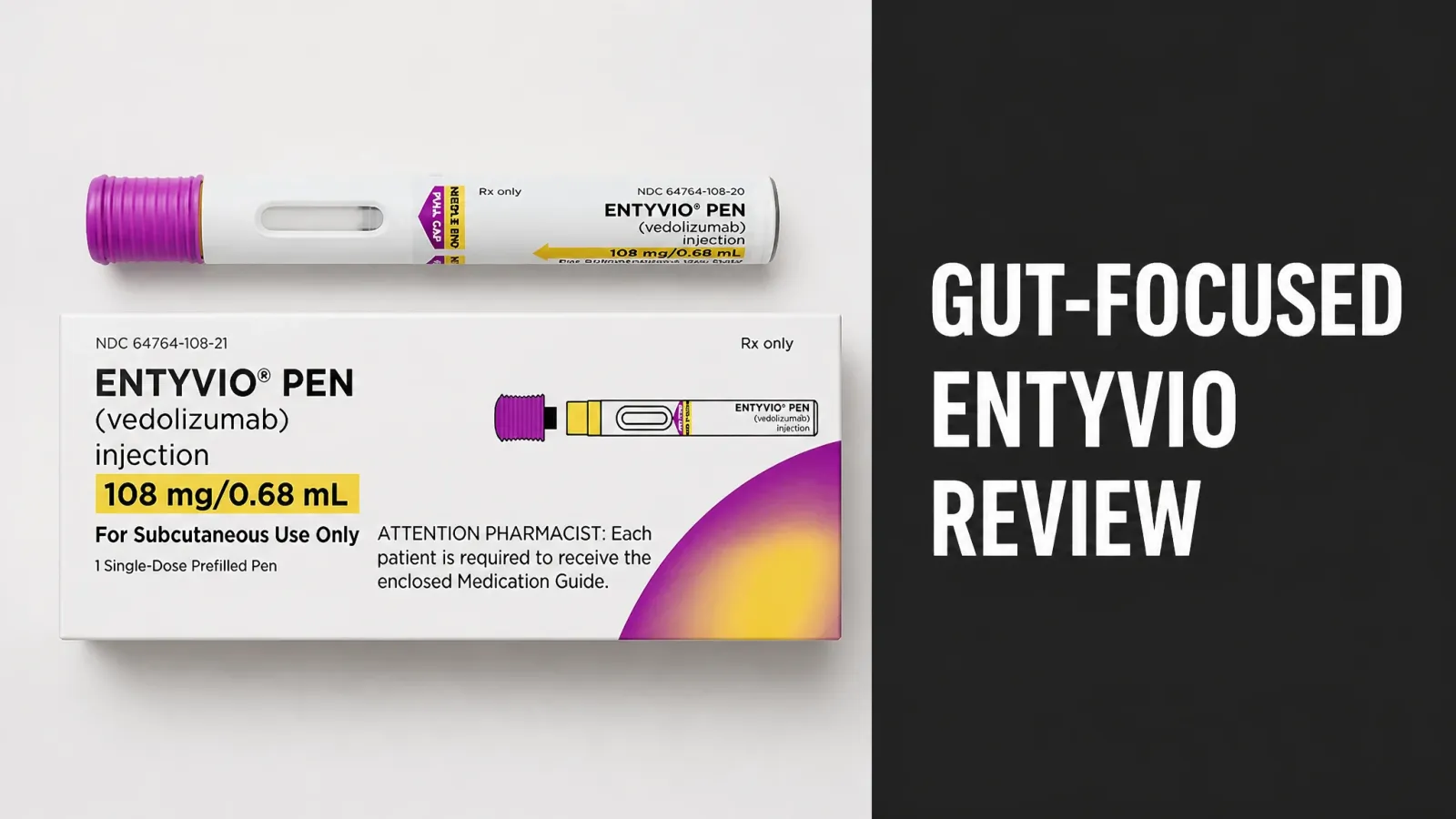
Entyvio (vedolizumab) is a prescription biologic from Takeda for adults with moderately to severely active Crohn's disease or ulcerative colitis. Doctors have prescribed it since the FDA approved the IV form in May 2014, and Takeda calls it gut-focused.
That label raises fair questions. Does a gut-focused biologic actually calm inflammation? Our team read the FDA prescribing information, Takeda's patient materials, and an infusion clinic's guide. Those sources agree on how the drug works, how it is dosed, and which risks matter.
This review covers what Entyvio is, how it works, its benefits, dosing, side effects, safety limits, and cost. It also explains where nutrition fits. Treatment decisions belong with your gastroenterologist, so use this guide to prepare better questions.
What Is Entyvio?
Entyvio is an integrin receptor antagonist indicated in adults for moderately to severely active ulcerative colitis and Crohn's disease. Its generic name is vedolizumab. A doctor must prescribe it, and you cannot buy it over the counter.
Takeda positions Entyvio for people whose earlier treatments fell short. Clinic guides describe it as an option when corticosteroids, immunosuppressants, or TNF inhibitors fail or cause problems. So it is rarely the first medicine a patient tries.
Two forms exist. A clinic gives the IV version through a vein. The Entyvio Pen is a 108 mg injection that patients can use at home. The pen becomes an option only after at least two IV starter doses.
How Does Entyvio Work in the Gut?
Entyvio blocks the integrin alpha4beta7 protein that guides inflammatory white blood cells into the digestive tract. Crohn's and ulcerative colitis are immune system disorders. In both, those cells drive inflammation in the gut lining.
Takeda describes this as gut-focused, because the drug helps block certain inflammation-causing cells from entering the gut. Infusion clinics call it gut-selective. In plain English: it tries to calm inflammation where it starts.
Does Gut-Focused Mean Fewer Side Effects?
Not automatically. Clinics say the targeted action may mean fewer effects across the body than broader biologics. But the FDA label still lists infection risk, allergic reactions, and liver warnings. Gut-focused describes the target, not a guarantee of safety.
What Are the Benefits of Entyvio?
Entyvio aims to bring Crohn's disease and ulcerative colitis into remission and keep it there. Takeda reports that many patients on the IV form reached remission at Week 52, and some did so without steroids. Some saw symptom relief as early as Week 6.
Takeda adds that individual results vary. That caveat matters. Remission means few to no symptoms and an improved condition, and not every patient gets there.
Benefits patients and clinics point to:
- Fewer flare-ups
- Less abdominal pain and diarrhea
- More regular bowel habits
- Reduced need for corticosteroids
- An at-home pen option after IV starter doses
Does Entyvio Actually Work?
Yes, for many patients, but not for everyone. The label tells doctors to stop Entyvio if there is no sign of therapeutic benefit by Week 14. So the drug gets a fixed trial period, and your doctor judges the result.
What Do Entyvio Reviews Say?
The sources our team reviewed were Takeda's own patient stories and clinic guides. We did not find independent, verified patient review data. So treat the praise below as manufacturer and provider reporting, not a neutral survey.
What Do Patients Like About Entyvio?
Takeda's featured patients describe years of moving between medicines and flares before settling on Entyvio. Clinics report fewer flares and less steroid use. Patients also value having two options, since the pen cuts clinic visits after the starter phase.
What Are the Common Complaints?
The drawbacks come from the label. The first doses need IV infusions, and benefit is not guaranteed. Common side effects include headache, joint pain, and colds. Patients who get no benefit by Week 14 are told to stop.
How Is Entyvio Dosed: IV or Pen?
Entyvio starts with two 300 mg IV infusions, at Week 0 and Week 2. Each infusion runs about 30 minutes. At Week 6, patients can stay on IV or switch to the pen.
IV versus pen at a glance:
| Detail | Entyvio IV | Entyvio Pen |
|---|---|---|
| Dose | 300 mg | 108 mg |
| Schedule after starter doses | Every 8 weeks | Every 2 weeks |
| Where given | Clinic or infusion center | Home or on the go |
| Starter requirement | None | At least 2 IV doses first |
Your doctor should train you on injection technique before you use the pen at home. Patients already responding to IV after Week 6 can switch, taking the first pen dose in place of the next scheduled infusion.
What Are the Side Effects of Entyvio?
The most common side effects include nasopharyngitis, headache, joint pain, nausea, fever, and upper respiratory infections. The label lists these as reactions seen in at least 3% of patients and at least 1% more often than placebo.
Other reported common effects:
- Fatigue
- Cough and bronchitis
- Influenza
- Back pain
- Rash and itching
Serious effects are rarer but real. Infusion-related and allergic reactions can happen during treatment or several hours later. Call your doctor right away for a rash, swelling of the lips or face, wheezing, dizziness, or trouble breathing.
Patients on Entyvio face a higher infection risk. The label also says a risk of progressive multifocal leukoencephalopathy (PML) cannot be ruled out, so doctors watch for new neurological symptoms. Liver injury has been reported, and jaundice calls for stopping the drug.
Who Should Avoid Entyvio?
People with a prior allergic reaction to Entyvio or its ingredients should not receive it. The FDA label also does not recommend it for patients with active, severe infections until those are controlled.
Vaccines deserve attention. The label says to update immunizations before starting, and it includes a warning about live and oral vaccines. Ask your doctor which shots you need first.
Is Entyvio Approved for Children?
No. The 2024 label states that safety and effectiveness in pediatric patients have not been established. Takeda announced on June 9, 2026 that the FDA accepted an application to review IV Entyvio for pediatric ulcerative colitis and Crohn's disease. Acceptance for review is not approval.
How Much Does Entyvio Cost?
Takeda does not publish a list price on its patient site. Instead it says eligible patients may pay as little as $0 per dose. Your real cost depends on insurance, the form you use, and whether you qualify for the support program.
The company also offers one-on-one support through EntyvioConnect for people prescribed the drug. Takeda notes that coverage for the pen has been growing as of January 2025. Call your insurer and your clinic before your first dose to confirm your out-of-pocket cost.
Is Entyvio Worth the Price?
That depends on your disease and your history. For patients who have not responded to other therapies, a biologic that reaches remission can be worth it. For milder cases, your doctor may suggest other options first.
Should You Try Optimal Weight Plan Alongside Treatment?
Entyvio treats the inflammation. It does not plan your meals, protect your weight, or fix your energy. Living with Crohn's or ulcerative colitis often makes eating hard, and that gap is where our coaches at Optimal Weight Plan step in.
Here's the thing: no coach replaces your gastroenterologist, and we never advise changing your prescription. Our team at Optimal Weight Plan builds practical nutrition and habit plans that work alongside the care you already have.
Want support that fits your treatment? Book a free call with our coaches and build a plan around your doctor's guidance.