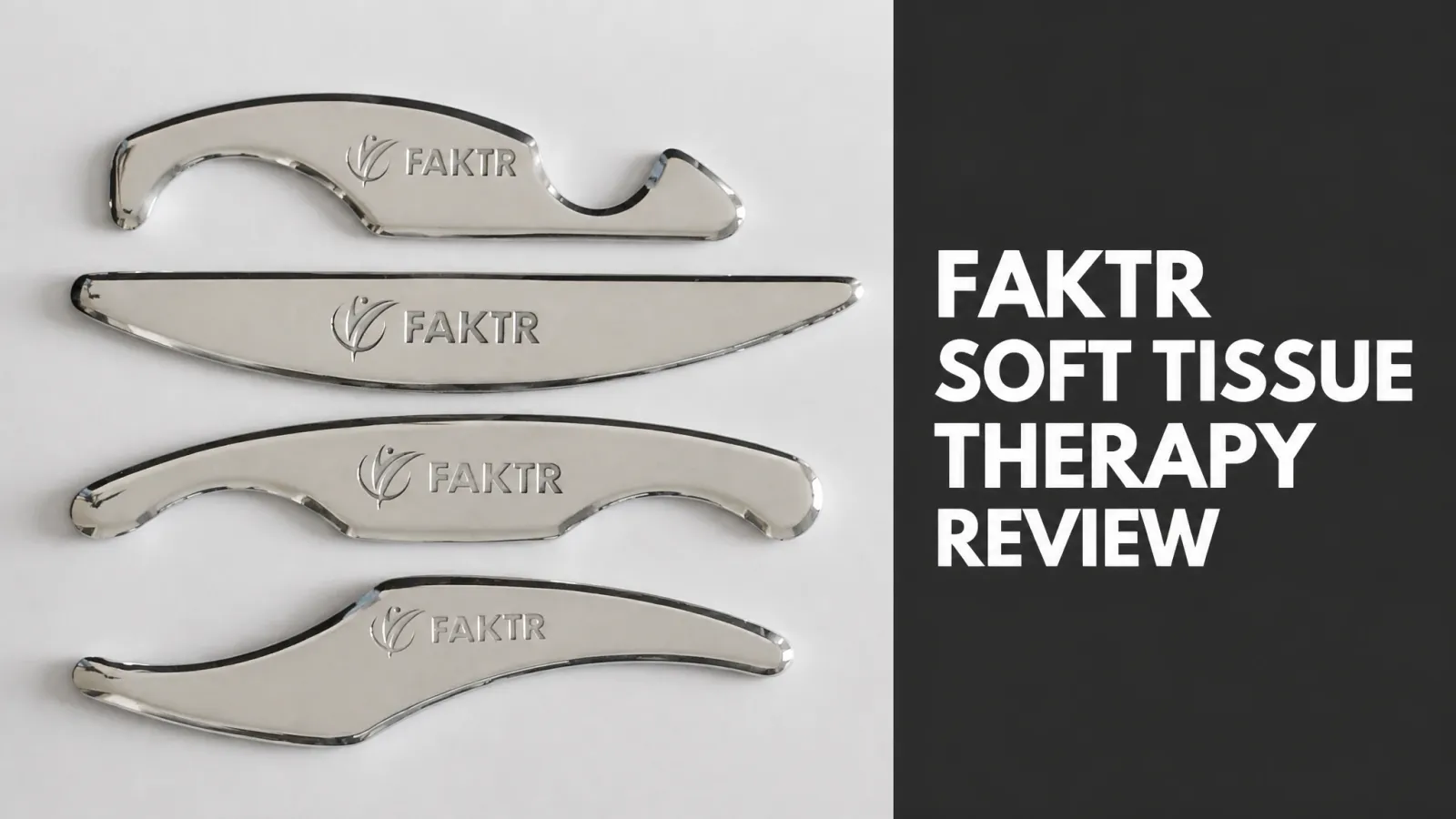
FAKTR stands for Functional and Kinetic Treatment with Rehab. It is a soft tissue therapy that practitioners use to treat pain, stiffness, and movement problems. Chiropractors and therapists apply it by hand or with curved steel instruments.
Clinics call it fast and effective. The research is thinner than the marketing. One randomized trial, a handful of practitioner guides, and many clinic pages make up the public record. Pain, mobility, and recovery speed are the main claims. Cost and risks get far less attention.
So what does the evidence actually say? This review covers how FAKTR works, what a session feels like, what the one clinical trial found, and who should skip it. Our team at Optimal Weight Plan also explains where movement-based care fits next to a healthy weight plan.
What Is FAKTR Soft Tissue Therapy?
FAKTR is a treatment system that combines instrument-assisted soft tissue work, manual techniques, and rehab movement to relieve musculoskeletal pain. The name means Functional and Kinetic Treatment with Rehab. Practitioners use it on muscles, tendons, ligaments, fascia, and nerves.
The system treats the whole movement pattern, not only the sore spot. A practitioner assesses how you move, finds the restricted tissue, and treats it while you move. That is the main difference from static massage.
Clinics use it for athletes, desk workers, and people with long-running aches. Many pages describe it as suitable for all ages and activity levels. Others admit it does not suit every patient or every condition.
Who Created FAKTR?
Dr. Thomas Hyde and Dr. Greg Doerr developed the FAKTR concept from more than 20 years of combined experience in chiropractic, rehabilitation, and soft tissue manipulation. Both clinicians formalized the system in 2010.
Earlier instrument-assisted soft tissue manipulation (IASTM) focused on static treatment at the site of pain. Hyde and Doerr added dynamic cupping, joint compression flossing, and treatment during active movement. Today, certified practitioners offer the system in chiropractic and physical therapy clinics.
How Does FAKTR Work?
FAKTR works by applying pressure to restricted soft tissue while the patient moves the affected area. The practitioner puts the body in the position that provokes pain. Motion then becomes part of the treatment. Clinics say this promotes tissue remodeling and better circulation.
Practitioners use research-backed assessments first. These tests aim to find the root cause of pain, not just the symptom. Why does that matter? Pain often shows up far from the real problem. A stiff hip can load a sore knee.
The hands-on part uses fingers, curved stainless steel tools, cupping, or compression flossing. Clinics argue that movement during treatment beats the old rest-and-recover advice. That claim comes from the clinics themselves, so read it with care.
Core FAKTR Techniques:
- Instrument-assisted soft tissue manipulation
- Manual soft tissue release
- Dynamic cupping
- Joint compression flossing
- Rehab exercises tied to the treated area
What Happens in a FAKTR Session?
A FAKTR session starts with an assessment of your condition and movement patterns, then moves to hands-on treatment with or without instruments. The practitioner builds a plan around the areas of dysfunction they find.
The treatment itself can take a few minutes or up to half an hour, depending on the problem. You stay active during it. Expect controlled pressure and some movement of the sore area.
Home exercises usually follow. Practitioners say results last longer when you pair care with corrective exercise. Here's the catch: that homework is part of the price you pay in time.
What Are the Benefits of FAKTR?
Clinics claim FAKTR delivers faster pain relief, better joint mobility, quicker recovery, and lower injury risk. Those claims come from provider websites. The strongest independent support is a single randomized trial on ankle sprains.
Personalized care is the other selling point. Each plan is built around your assessment, not a fixed protocol. That flexibility is real, but it also makes results hard to compare between clinics.
Claimed Benefits of FAKTR:
- Rapid pain relief from released tissue restrictions
- Improved joint mobility and range of motion
- Faster recovery and less downtime
- Personalized treatment plans
- Prevention of future injuries
Does FAKTR Actually Relieve Pain?
Yes, in one trial. Researchers found FAKTR plus cryotherapy reduced pain ratings more than cryotherapy alone in adults with acute ankle sprains. The pain rating difference was significant at P ≤ .01.
The trial was small. It enrolled 40 adults aged 18 to 40 with grade I or II inversion ankle sprains. Half received FAKTR plus cryotherapy, and half received cryotherapy only.
That is useful evidence for one injury. It does not prove FAKTR works for back pain, shoulder pain, or chronic conditions. Those claims still rest on clinic testimony.
Which Conditions Does FAKTR Treat?
Practitioners use FAKTR for tendonitis, plantar fasciitis, shoulder pain, muscle strains, postural dysfunction, and sports injuries. Some clinics also list headaches, back pain, neck pain, scar tissue, and rehab after knee replacement.
Post-surgical use appears on several clinic pages. They say FAKTR can support healing and reduce scar tissue formation. Ask your surgeon before you book anything after an operation.
Conditions Commonly Listed:
- Tendonitis and plantar fasciitis
- Shoulder, neck, and back pain
- Muscle strains and joint dysfunction
- Postural and workplace pain
- Post-surgical stiffness and scar tissue
What Do FAKTR Reviews Say?
FAKTR reviews are mostly positive, but nearly all of them come from clinics that sell the treatment. We found no large pool of independent patient ratings. One clinic page shows a 5 out of 5 rating, but that score belongs to the clinic overall.
That means the review picture is soft. Treat provider claims as marketing. Treat the randomized trial as the firmest data point available.
What Do Patients Praise?
Providers say patients report quick gains in pain, range of motion, and comfort after just a few sessions. One guide says most patients feel relief after 3 to 6 sessions. Another says many problems resolve within a few treatments.
The active, movement-based style gets praise too. Patients like that treatment happens in the position that hurts. Practitioners say this targets the problem more directly than static work.
What Providers Say Patients Like:
- Quick early improvement in pain
- Better range of motion
- Short sessions with active participation
- A plan tailored to the individual
What Are the Common Complaints?
The main complaint is discomfort. Practitioners describe it as mild and similar to deep tissue massage. Others admit that pressure on tight tissue is not always pleasant.
Results also vary. One clinic states plainly that FAKTR is not effective on all conditions and not right for every patient. The number of sessions depends on how severe and long-standing the problem is.
Evidence is the third gap. Beyond the ankle sprain trial, claims lean on practitioner experience. That does not make them false. It does mean you should ask for specifics before you commit.
How Does FAKTR Compare to Cryotherapy and Massage?
FAKTR adds active movement and rehab to the instrument-assisted soft tissue work that older methods did statically. Cryotherapy cools the tissue to calm pain. Massage works the muscle by hand. FAKTR treats tissue while you move through the painful range.
Practitioners describe the pressure as similar to deep tissue massage. The difference is the assessment, the instruments, and the exercises that follow. Is it worth the extra complexity? That depends on your injury.
FAKTR vs Other Options:
| Option | Approach | Movement During Treatment |
|---|---|---|
| FAKTR | Instruments, manual work, cupping, rehab | Yes |
| Standard IASTM | Instruments at the site of pain | Usually static |
| Deep tissue massage | Hands-on pressure on muscle | No |
| Cryotherapy | Cooling the injured area | No |
Did FAKTR Beat Cryotherapy in Clinical Trials?
Partly. The ankle sprain trial found FAKTR plus cryotherapy improved pain, pressure pain threshold, balance, and foot function compared with cryotherapy alone. The authors called the result a trend toward greater clinical effectiveness.
The trial found no significant difference in ankle range of motion or swelling. So the win was real but narrow. Participants had three treatments, with a final measurement two weeks after the third.
Trial Results:
- Pain rating: significant difference (P ≤ .01)
- Pressure pain threshold: significant difference (P ≤ .05)
- Balance and proprioception: significant difference (P ≤ .01)
- Foot function index: significant difference (P ≤ .01)
- Ankle dorsiflexion and swelling: no significant difference
Is FAKTR Safe?
Generally yes, when a trained practitioner performs it. FAKTR involves pressure on soft tissue, and the sources describe the discomfort as mild. The sources we reviewed did not list serious adverse effects. They also did not publish detailed safety data.
Mild soreness after treatment is plausible with any deep soft tissue work. Tell your practitioner about pain that sharpens or lingers. Stop and ask for guidance if a session hurts more than expected.
Look for a certified practitioner. One clinic page names its provider as a certified FAKTR practitioner who completes a full exam first. That exam is what decides whether the treatment suits your condition.
Who Should Avoid FAKTR?
The sources do not publish a formal list. One clinic says plainly that FAKTR is not appropriate for all patients. The exam is the screening step, so be honest about your history.
Raise these points with a clinician before booking. This is general caution, not a rule from the FAKTR sources.
Questions to Ask First:
- Do you take blood thinners or bruise easily?
- Do you have open wounds, skin conditions, or a recent fracture?
- Are you recovering from surgery?
- Is your pain sudden, severe, or unexplained?
How Much Does FAKTR Cost?
FAKTR has no fixed price, because each clinic sets its own session fees. None of the sources we reviewed published a price. Ask for the per-visit fee, the expected number of sessions, and whether the exam is billed separately.
Session count drives total cost. One guide cites relief after 3 to 6 sessions, but severity and how long you've had the problem change that. Ask whether insurance covers it, since coverage often depends on the provider type.
Where Can You Get FAKTR?
Chiropractors and physical therapists offer FAKTR at clinics across the United States. Our research found providers in Pennsylvania, North Carolina, Nebraska, California, and Virginia. Search for a certified FAKTR practitioner near you, then call to confirm.
What to Check Before You Book:
- FAKTR certification of the practitioner
- Price per session and expected session count
- Whether the first visit includes a full exam
- Home exercises included in the plan
Is FAKTR Worth the Price?
Possibly yes, for a specific injury. The ankle sprain trial supports FAKTR as a useful add-on to cryotherapy for pain, balance, and foot function. For other conditions, the case rests on clinic claims.
A fair test is simple. Try three to six sessions, track your pain and movement, and stop if nothing changes. A good practitioner will welcome that plan.
Why Should You Try Optimal Weight Plan?
FAKTR treats the sore tissue. It doesn't build the daily habits that keep you moving. That's where Optimal Weight Plan comes in. Our coaches help you build steady nutrition and activity routines around your own body.
Pain often stops people from exercising, and that stall makes weight goals harder. Don't let it sit. Get your pain checked by a clinician first, then pair your recovery with a plan that fits.
Can Optimal Weight Plan Support Your Pain Relief Goals?
Yes, as a partner to medical care, not a replacement. Our team at Optimal Weight Plan does not treat injuries, but our experts help you rebuild healthy eating and gentle activity once your clinician clears you.
You get a coach, a clear plan, and regular check-ins. Book a free call with our coaches and start your next phase of recovery with support.