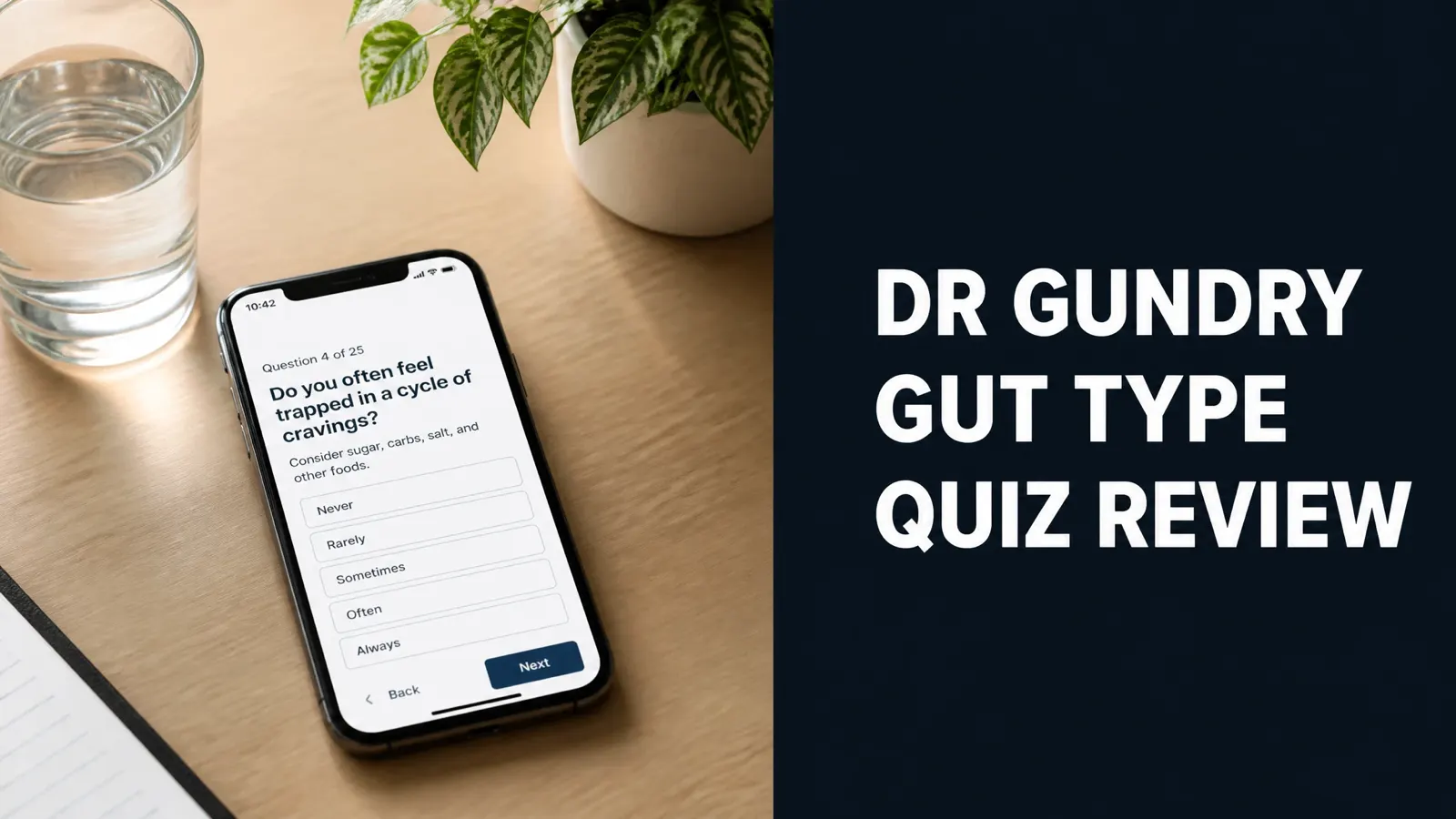
The Dr Gundry gut type quiz is a free online questionnaire that sorts readers into a gut category using self-reported symptoms. It is tied to Dr. Steven Gundry, who sells supplements and runs a paid telehealth plan.
Readers keep asking the same things. Is it really free? Is it accurate? And do critics have a point about his diet claims? Our team read the quiz, the brand's own pages, and independent reviews to find out.
Below, we cover how the quiz works, what it asks, what critics say, and what to do with your result. By the end, you will know if it deserves your time.
What Is the Dr Gundry Gut Type Quiz?
The Dr Gundry gut type quiz is a free online questionnaire that sorts you into a gut category based on the symptoms, habits, and health history you report. It comes from the brand built around Dr. Steven Gundry, a former heart surgeon turned supplement seller and author.
The quiz does not test your stool, blood, or microbiome. It only reads your answers. This means the result is a symptom-based guess, not a lab finding.
Gundry Health also runs a related Leaky Gut Quiz on its own site. That version asks simple Yes, Sometimes, or No questions about weight, bowel habits, bloating, bad breath, and stomach pain after meals.
How Does the Gut Type Quiz Work?
The quiz works by scoring your answers to questions about digestion, energy, cravings, and health history. A third-party review from InnerBuddies says it then assigns a gut type and offers general dietary guidance to match.
The Leaky Gut Quiz follows the same pattern. Each question offers three answers. Examples include whether you feel bloated after eating, need laxatives, or notice a coated tongue.
Steps:
- Open the quiz on the official Gundry site
- Answer each symptom question with Yes, Sometimes, or No
- Submit your answers to get a gut type or risk result
- Review the suggested diet and next steps
Expect a few minutes of tapping. Then comes the key step: the result page points you toward Dr. Gundry's products or his paid clinical plans.
What Questions Does the Quiz Ask?
The quiz asks about bowel habits, bloating, gas, stomach pain, weight struggles, and other everyday digestive signs. The Leaky Gut Quiz questions include whether you feel constipated often and whether your stool is typically hard.
It also asks about a coated or fuzzy tongue, bad breath, and the urge to pass gas soon after you eat. Each of these is common and has many possible causes.
Key points:
- Weight loss struggles
- Hard stool or constipation
- Bloating and indigestion after meals
- Bad breath or a coated tongue
- Stomach pain after eating
That last point matters. A symptom list cannot tell a food intolerance from stress, medication effects, or a medical condition.
Is the Dr Gundry Gut Type Quiz Really Free?
Yes. The quiz itself costs nothing to take and needs no purchase to see a result. Gundry Health also offers a free 15 minute consultation call.
But free does not mean neutral. The quiz works as the front door to a sales funnel. Gundry Health sells personalized plans built around lab testing, and the Gundry MD brand sells supplements.
So take the quiz knowing what it is. Our team at Optimal Weight Plan treats it as a conversation starter, not a diagnosis.
Is the Quiz Accurate?
No, not in a clinical sense. A symptom quiz cannot confirm a gut condition because it measures what you feel, not what is happening in your gut. No lab test sits behind the answers.
Think of it this way: the quiz is a screening mood check. It can flag patterns worth raising with a doctor. It cannot prove leaky gut, which is not a formal diagnosis in mainstream medicine.
By comparison, a stool test or a clinician visit looks at actual data. The quiz only looks at your self-report.
What Do Critics Say About Dr. Gundry?
Critics say Dr. Gundry's lectin-avoidance claims are not backed by controlled evidence. His Wikipedia entry notes that the scientific community has rejected his claims about dangerous lectins.
Robert Eckel, a past president of the American Heart Association, said Gundry's diet advice contradicts major dietary guidelines. Harriet Hall of Science-Based Medicine called his evidence anecdotal because it has no control groups.
Key points:
- Eckel: advice conflicts with major health groups
- Hall: evidence is anecdotal, no control groups
- Kratz: 29 percent for scientific accuracy
- Today's Dietitian: lectin-free diets are not advised
Red Pen Reviews scored his book The Plant Paradox 49 percent overall and 29 percent for scientific accuracy. The same review said the diet may still help people who can stick to it.
What Do Users Say About Gundry Products?
User feedback on the wider brand is mixed, with Gundry MD holding a 3.4 out of 5 TrustScore from about 7,400 Trustpilot reviews. That is rated Average by the platform.
Reddit threads in r/Microbiome discuss the gut type quiz alongside products like Bio Complete 3. Posters there are split between curious and skeptical.
Here is the part most people miss: those scores rate the company and its products, not the quiz itself. We found no independent study testing whether the quiz result predicts anything.
Gut Type Quiz vs Gut Microbiome Test?
A microbiome test analyzes a stool sample, while the quiz only analyzes your answers. That is the single biggest difference between the two.
Gundry Health also offers lab-based testing for food sensitivities and intestinal permeability. Those plans cost money and come with a personalized food list.
Quiz compared to testing:
| Feature | Gut Type Quiz | Microbiome Test |
|---|---|---|
| Input | Your answers | Stool sample |
| Cost | Free | Paid |
| Lab data | None | Yes |
| Time | A few minutes | Days to weeks |
Both routes still have limits. Even lab gut tests are debated, so results should be reviewed with a licensed clinician.
Are There Risks in Following the Quiz Results?
Yes. The main risk comes from the diet advice attached to the result, not from taking the quiz. A lectin-free plan cuts out beans, many vegetables, and whole grains.
Harriet Hall warned that avoiding those foods might lead to inadequate nutrition. Today's Dietitian said raw beans can be harmful but called a lectin-free diet unnecessary.
The bad news? Persistent symptoms can hide real problems. Blood in stool, unexplained weight loss, or severe pain need a doctor, not a quiz.
Who Should Skip the Quiz?
People with severe or worsening symptoms should see a doctor first instead of relying on an online quiz. That includes anyone with blood in the stool, ongoing vomiting, or sudden weight loss.
Anyone with a diagnosed condition such as celiac disease or inflammatory bowel disease should also check with their care team before changing their diet.
Pregnant users and people on medication should do the same. A free quiz knows none of your history.
What Should You Do With Your Result?
Treat the result as a list of symptoms to discuss with a healthcare provider, not as a prescription. Print or save your answers and bring them to your visit.
Next, try simple steps that carry little risk. Eat more fiber from varied plants, drink enough water, sleep well, and track which foods bother you.
Steps:
- Save your quiz answers
- Track meals and symptoms for two weeks
- Raise patterns with your doctor
- Ask about proper testing if symptoms persist
Be careful with any supplement the result suggests. Ask a pharmacist or doctor if it fits your health.
Why Should You Try Optimal Weight Plan?
Look, a quiz can start the conversation, but it cannot build your habits. That is where our team at Optimal Weight Plan steps in. Our coaches turn vague gut symptoms into a simple, realistic routine.
Here's the thing: lasting results come from steady food, movement, and sleep choices, not from a label. Optimal Weight Plan pairs you with a coach who keeps you on track week after week.
Ready to stop guessing? Book a free call with our coaches and get a plan built for you.