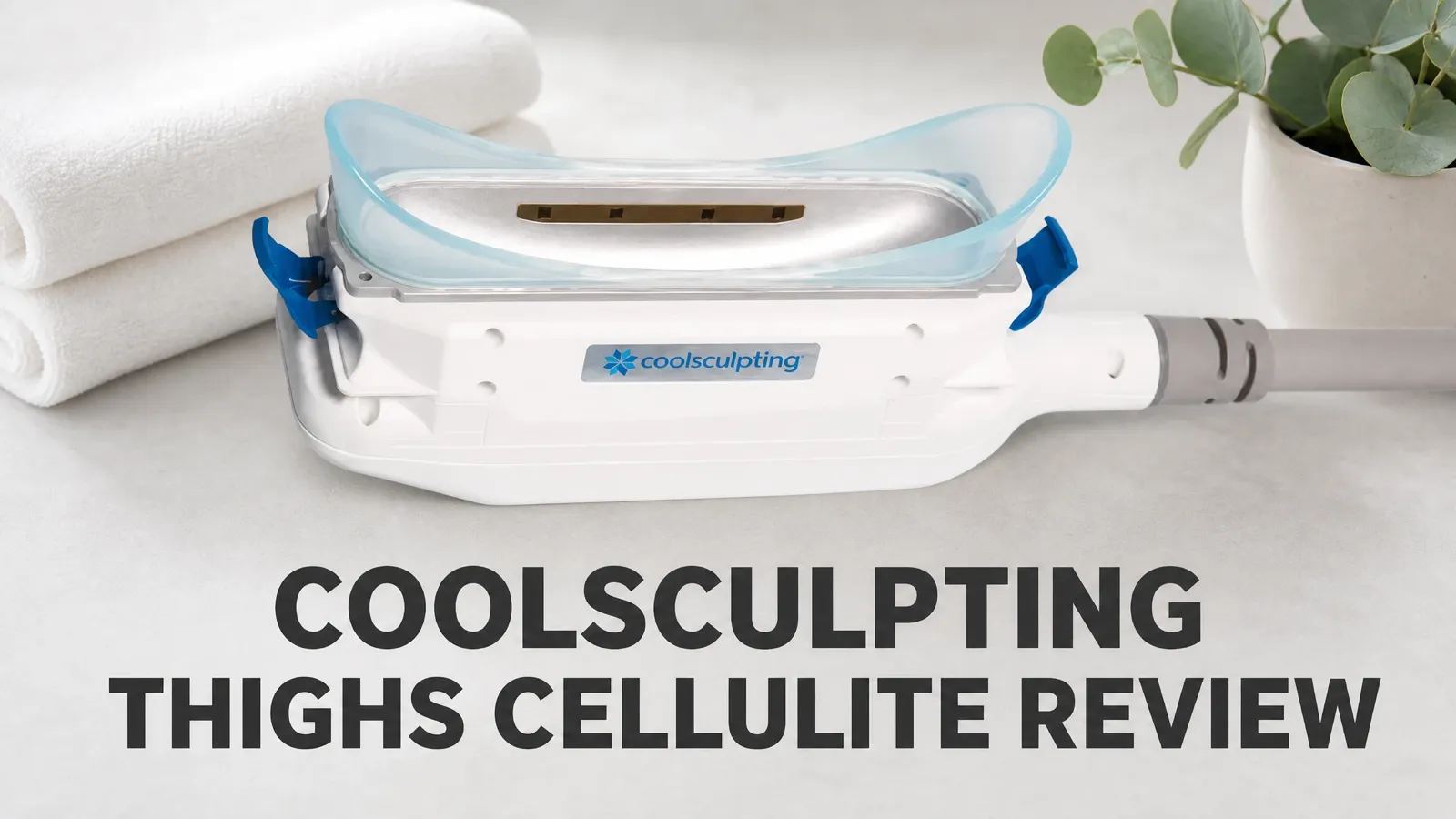
CoolSculpting for thighs freezes stubborn fat cells through a process called cryolipolysis. Thousands of patients try it every year hoping smoother thighs and less cellulite come with it. This review breaks down what the treatment actually does to fat versus dimpled skin.
Thigh fat shrinks after treatment, but the fibrous bands behind cellulite often stay untouched. Real patient reviews describe swelling that lasts months and dimples that briefly look worse before they improve. Some clinics pair the treatment with Cellfina or radiofrequency for a fuller fix. Pricing swings from a few hundred to several thousand dollars depending on the number of areas treated.
Cellulite has no permanent cure, and CoolSculpting was never built to be one. Our team at Optimal Weight Plan dug into the clinical research and real patient experiences below. Keep reading to see exactly where this treatment helps, where it falls short, and what actually smooths cellulite long term.
What Is CoolSculpting for Thighs?
CoolSculpting is an FDA-cleared, non-surgical fat-reduction treatment that freezes fat cells through cryolipolysis. A licensed provider applies a suctioned applicator to the inner or outer thigh, cooling the tissue until targeted fat cells crystallize and die. The body then clears the dead cells naturally over the following weeks.
The device relies on a simple biological fact. Fat cells die at a higher temperature than skin cells, muscle, or nerves. This lets providers chill a treatment area enough to damage fat without harming the tissue around it. One session on a single thigh runs 35 to 60 minutes.
CoolSculpting first earned FDA clearance in 2010 for flank fat. Regulators later expanded approval to the abdomen, thighs, back, chin, and bra-fat areas. That expansion followed years of clinical trials measuring fat-volume reduction with calipers and imaging.
How Does CoolSculpting Work on Fat?
A gel pad protects the skin. The applicator suctions the fatty tissue between two cooling panels. Patients feel intense cold for the first several minutes, then numbness sets in. Most people read, work, or nap through the remaining session time.
Dead fat cells travel through the lymphatic system over one to three months. This is why results build gradually instead of appearing overnight. A single treatment produces up to 25% fat reduction in the treated area, based on clinic-reported outcomes.
The remaining fat cells stay in the body permanently smaller in number. Weight gain after treatment can still enlarge the cells that remain. This is why providers stress that CoolSculpting targets stubborn pockets, not general weight loss.
Does CoolSculpting Remove Cellulite From Thighs?
No. CoolSculpting does not remove cellulite from thighs because it targets fat cells, not the fibrous connective bands that cause dimpling. Cellulite forms when those bands pull down on the skin while fat pushes up against it from below.
CoolSculpting's own manufacturer confirms this directly on its treatment pages. The device reduces fat volume, and that reduction sometimes softens the look of cellulite as a side effect. It was never cleared or marketed as a cellulite treatment.
Cellfina remains the only FDA-cleared procedure built specifically to release those fibrous bands. Clinics routinely pair CoolSculpting with Cellfina, radiofrequency, or Cellutone when a patient wants both fat reduction and smoother-looking skin.
Why Doesn't CoolSculpting Treat Cellulite Directly?
Cellulite involves three separate factors: excess fat, weakened collagen, and fibrous septae bands. CoolSculpting's cooling technology only affects the first factor. The bands stay exactly where they were before treatment, still pulling the skin down.
Dermatologists at multiple clinics describe cellulite as a structural skin issue, not a fat-volume issue. A thin person with strong fibrous bands can have visible cellulite. A heavier person with looser bands sometimes has none. Fat reduction alone rarely changes that structure.
Can Fat Reduction Improve Cellulite Appearance?
Sometimes. Removing fat can pull tension off the skin in a way that softens visible dimpling for some patients. Other patients report the opposite. Less fat under the skin means less padding, and the same fibrous bands can look more pronounced instead of less.
Providers interviewed for this review say results vary by anatomy more than by technique. Patients with looser skin and moderate fibrous banding tend to see the most improvement. Patients with tight, deeply dimpled tissue often need a dedicated cellulite treatment on top of CoolSculpting.
What Do CoolSculpting Thigh Reviews Say?
Patient reviews on CoolSculpting for thighs describe a mix of satisfaction with fat loss and frustration with unchanged or worsened cellulite. Independent research review sites show 80 to 93% of patients reporting satisfaction with overall results across treated areas.
That satisfaction figure covers fat reduction broadly, not cellulite specifically. When reviewers narrow their question to cellulite alone, the responses split much closer to 50/50 depending on their starting skin texture and expectations going in.
Positive Experiences
Patients frequently praise the lack of downtime. Most return to work or normal activity the same day. Reviewers describe visible thigh slimming appearing gradually over 8 to 12 weeks, with the final look settling in around the three-month mark.
Several patients on physician Q&A platforms describe cellulite genuinely looking smoother after treatment. One provider noted that patients from early lateral-thigh clinical studies saw fat reduction alongside a visible drop in cellulite dimpling, not just slimmer legs.
Common Complaints
The most common complaint involves cellulite appearing worse in the first four to six weeks. Swelling from the procedure itself temporarily plumps the treated area, and that swelling can pull harder on the existing fibrous bands.
Doctors responding to these complaints consistently urge patience through the twelve-week mark. One physician described losing the fatty cushion under the skin as the real culprit. Less padding can make pre-existing dimples more visible, not less, for some patients.
Patient Feedback Summary:
| Feedback Type | Common Timeline | Reported Outcome |
|---|---|---|
| Satisfied with fat loss | 8-12 weeks | Visible thigh slimming |
| Cellulite looks worse initially | 2-6 weeks | Swelling-related, usually temporary |
| Cellulite improves modestly | 3-4 months | Softer dimpling, not eliminated |
| No change in cellulite | 3-4 months | Fibrous bands remain untreated |
CoolSculpting vs Cellfina vs CoolTone for Cellulite?
CoolSculpting, Cellfina, and CoolTone target three different structures, so combining them treats cellulite more completely than any single device alone. CoolSculpting reduces fat volume. Cellfina releases fibrous bands. CoolTone builds underlying muscle tone.
Cellfina is the only one of the three cleared specifically for cellulite. It works by inserting a small device under the skin to sever the exact bands causing the dimples. Results are described as long-lasting once the bands are released.
CoolTone uses magnetic muscle stimulation rather than cooling. It strengthens the muscle beneath the fat layer, which can create a firmer overall contour. The manufacturer states the safety and efficacy of combining CoolSculpting with CoolTone has not been separately evaluated by the FDA.
Treatment Comparison:
| Treatment | Targets | Cellulite-Specific |
|---|---|---|
| CoolSculpting | Fat cells | No |
| Cellfina | Fibrous bands | Yes, FDA-cleared |
| CoolTone | Muscle tone | No |
What Are the Side Effects of CoolSculpting on Thighs?
CoolSculpting on thighs causes temporary redness, swelling, numbness, and bruising in nearly every patient. These effects typically resolve within two to four weeks, though some patients report lingering swelling for up to six months.
A rare but documented side effect is paradoxical adipose hyperplasia, where treated fat cells enlarge instead of shrinking. This occurs in an estimated 1 in 3,000 to 1 in 20,000 treatments, depending on the study cited, and typically requires liposuction to correct.
- Redness and swelling at the applicator site
- Temporary numbness lasting days to weeks
- Bruising from the suction mechanism
- Rare paradoxical fat enlargement requiring correction
Who Should Avoid CoolSculpting?
Patients with cryoglobulinemia, cold agglutinin disease, or paroxysmal cold hemoglobinuria should not receive CoolSculpting under any circumstances. These conditions cause abnormal reactions to cold that the device's cooling technology can trigger or worsen.
Pregnant patients, patients with active skin infections near the treatment site, and patients with unrealistic expectations about cellulite removal are also poor candidates. A qualified provider screens for these factors during the initial consultation.
Is CoolSculpting FDA Approved and Safe?
Yes. CoolSculpting is FDA-cleared for fat reduction in nine treatment areas, including the thighs. That clearance covers fat bulges specifically. It does not extend to cellulite, and manufacturers do not claim otherwise in their own marketing materials.
A 2015 analysis of 19 studies published in Plastic and Reconstructive Surgery found patients lost 14.7% to 28.5% of fat volume in treated areas. A separate 2015 review of 16 studies in Aesthetic Surgery Journal reported an average 19.5% fat-volume reduction after four months.
Safety data across these studies remained consistent. The overwhelming majority of documented side effects were temporary redness, swelling, and numbness. Serious complications like paradoxical adipose hyperplasia were rare across the combined patient population.
How Much Does CoolSculpting for Thighs Cost?
CoolSculpting for thighs typically costs between $600 and $1,500 per treatment area, with most patients needing two to four sessions for visible results. Total cost for both inner and outer thighs often lands between $2,400 and $6,000.
Pricing depends heavily on geographic location, provider experience, and the number of applicator cycles used per session. Clinics in major metro areas typically charge toward the higher end of that range. Package pricing for multiple sessions can reduce the per-treatment cost.
Financing programs through Allē, the CoolSculpting loyalty and payment platform, let patients spread costs over time. Approved applicants can access rates starting near 0% APR, though exact terms depend on individual credit history.
Is CoolSculpting Worth the Price for Cellulite?
CoolSculpting is worth the price for fat reduction, but it is a weak value specifically for cellulite. Patients paying primarily to fix dimpled skin often end up needing a second treatment like Cellfina to see the change they originally wanted.
Providers interviewed across multiple clinics recommend a combination plan upfront rather than trying CoolSculpting alone first. Combining treatments costs more initially but avoids paying for two separate consultation and recovery cycles down the line.
Where Can You Get CoolSculpting for Thighs?
CoolSculpting is available exclusively through licensed medical providers, including dermatologists, plastic surgeons, and certified med spas. The manufacturer maintains a provider directory through the Allē platform to help patients find a certified location nearby.
Choosing a provider matters more than choosing a clinic brand. Experienced injectors and technicians produce more even results and catch early signs of paradoxical adipose hyperplasia before it progresses. Ask any prospective provider how many thigh treatments they perform monthly.
Why Should You Try Optimal Weight Plan?
Look, CoolSculpting can shrink stubborn thigh fat. But it was never built to fix cellulite, and the reviews above prove it. If smoother, tighter thighs are the actual goal, a real coaching plan built around your body does more for less money.
Our coaches at Optimal Weight Plan build a personalized plan around strength training, nutrition, and the lifestyle habits that genuinely improve skin tone and connective tissue over time. No swelling. No six-month wait to see if it worked.
Start your free consultation with Optimal Weight Plan today and find out what your thighs actually need. You've got nothing to lose except the guesswork.