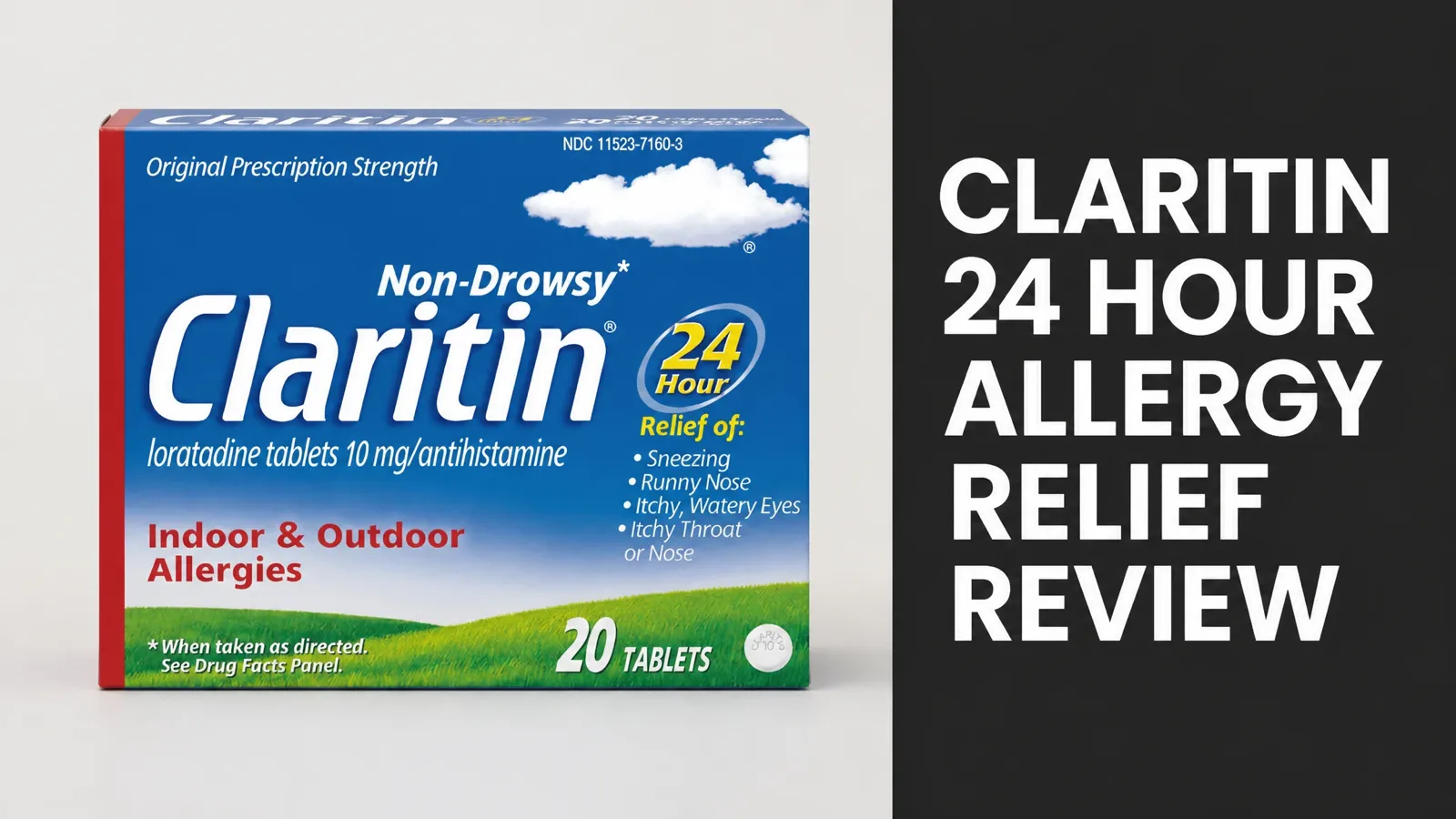
Claritin 24 Hour Allergy Relief Tablet sits on nearly every pharmacy shelf next to Zyrtec and Allegra, and that crowded shelf raises a fair question. Loratadine has been the active ingredient inside Claritin for decades, so does one tablet a day actually hold up for a full 24 hours?
The tablet treats sneezing, runny nose, itchy eyes, and itchy throat without the sedating effect older antihistamines carry. Reviewers report steady daily relief for mild seasonal symptoms, alongside a smaller but persistent group describing side effects the label doesn't fully explain.
This review breaks down what's actually in the tablet, how loratadine creates relief, what real buyers say after taking it, and how it stacks up against Zyrtec and Allegra. By the end, you'll know whether Claritin 24 Hour fits your allergy season.
What Is Claritin 24 Hour Allergy Relief Tablet?
Claritin 24 Hour is a non-drowsy, over-the-counter antihistamine tablet built around 10 mg of loratadine per dose. Bayer markets it as the number one physician-recommended non-drowsy oral allergy brand, sold in tablet, RediTabs, chewable, and liquid gel forms. Adults and children six and over take one tablet daily.
The tablet form uses lactose monohydrate, magnesium stearate, microcrystalline cellulose, and sodium starch glycolate as inactive ingredients. The RediTabs version swaps those for mannitol and mint flavor instead, since it dissolves on the tongue rather than requiring water.
Bayer positions Claritin as a once-daily solution rather than an as-needed rescue pill. Someone with daily pollen exposure takes one tablet each morning, while someone with occasional symptoms might reach for it only on high pollen-count days.
What Are the Active Ingredients in Claritin 24 Hour?
Loratadine is the only active ingredient, dosed at 10 mg per tablet. It belongs to the second-generation antihistamine class, a group designed to cross into the brain less than older drugs like diphenhydramine. That lower brain penetration is the reason Claritin carries a non-drowsy label.
Claritin 24 Hour at a Glance:
| Detail | Specification |
|---|---|
| Active ingredient | Loratadine 10 mg (antihistamine) |
| Dosing | 1 tablet every 24 hours |
| Minimum age | 6 years and older |
| Drowsiness profile | Non-drowsy when taken as directed |
How Does Claritin 24 Hour Work?
Claritin 24 Hour works by blocking histamine receptors, the chemical pathway that triggers sneezing, itching, and swelling during an allergic reaction. Allergens like pollen, mold, dust, and pet dander set off this cascade the moment the immune system treats them as a threat.
Histamine binds to H1 receptors throughout the nose, eyes, and skin once an allergen trips the immune response. Loratadine occupies those same receptors first. This blocks histamine from attaching and stops the sneezing, itching, and swelling before the signal reaches the tissue.
The drug's slow release keeps receptors blocked for a full 24-hour window. Peak blood concentration of loratadine's active metabolite builds gradually after the first dose. This sustained presence is what separates a once-daily tablet from short-acting antihistamines that wear off in hours.
Clearance from the body takes 36 to 48 hours even after the symptom-relief window ends. Daily dosing therefore builds on the previous day's blocked receptors rather than starting fresh each morning.
How Does Loratadine Avoid Drowsiness?
Loratadine's molecular structure limits how easily it crosses the blood-brain barrier compared to first-generation antihistamines. Less of the drug reaches brain tissue, so fewer users experience the sedation common with older allergy medications like diphenhydramine.
What Are the Benefits of Claritin 24 Hour?
Claritin 24 Hour delivers once-daily relief from six core allergy symptoms without the sedation older antihistamines cause. A single morning tablet is meant to carry a user through work, school, or outdoor activity without a midday redose.
Main Benefits Reported by Users and the Manufacturer:
- Relieves runny nose, sneezing, and nasal itching
- Calms itchy, watery eyes triggered by pollen and pet dander
- Non-drowsy formula suits daytime use at work or school
- One tablet covers symptoms triggered by over 200 allergens
The once-daily format earns consistent praise from buyers managing a busy schedule. Taking a single tablet with morning coffee removes the need to track multiple daily doses the way some short-acting antihistamines require.
Does Claritin Relieve Sneezing and Runny Nose?
Yes. Sneezing and runny nose are the symptoms Claritin's loratadine most consistently controls, according to both the manufacturer's labeling and recurring buyer feedback. Relief typically builds within one to three hours of the first dose and strengthens with continued daily use.
Does Claritin Cause Drowsiness?
No. Claritin is formulated to avoid the sedation older antihistamines produce, and most users report no drowsiness at the standard 10 mg dose. A smaller group of reviewers still describe fatigue or grogginess, which the label attributes to exceeding the recommended dose.
What Do Claritin 24 Hour Reviews Say?
Claritin 24 Hour holds a strong rating above 4.5 out of 5 stars on retail sites like CVS and Walmart, yet a notably lower average on medical review sites like Drugs.com. That gap suggests retail buyers and people tracking side effects closely report very different experiences.
Shoppers on CVS and Walmart frequently describe fast, dependable relief from itchy eyes and congestion without feeling tired during the day. Reviews on Drugs.com, drawn from people already monitoring symptoms for a doctor, skew toward a smaller but vocal group reporting problems.
What Do Positive Reviews Say?
Recurring Positive Themes:
- Noticeable relief from runny nose and itchy, watery eyes
- No daytime drowsiness at the standard dose
- Small, easy-to-swallow tablets
- Consistent results across repeated allergy seasons
What Do Negative Reviews Say?
Not every buyer gets the same result. A recurring group of reviewers on Drugs.com describe side effects the label lists only as rare, including brain fog, anxiety, and disrupted sleep. Several of these reviewers report the effects stopped within 48 hours of discontinuing the tablet.
Joint pain and headaches show up in a smaller cluster of reviews, with some users noting the pattern appeared more common among women over 49. Other reviewers simply report the tablet did little for severe seasonal symptoms despite daily use.
Claritin 24 Hour vs Zyrtec and Allegra?
Claritin 24 Hour uses loratadine, while Zyrtec relies on cetirizine and Allegra uses fexofenadine, three second-generation antihistamines with different speed and sedation profiles. Each drug clears allergy symptoms through the same H1-blocking mechanism, but timing and side effects vary.
Comparison at a Glance:
| Product | Active Ingredient | Best For |
|---|---|---|
| Claritin 24 Hour | Loratadine 10 mg | Daily non-drowsy relief, mild to moderate symptoms |
| Zyrtec | Cetirizine 10 mg | Faster onset, slightly higher drowsiness risk |
| Allegra | Fexofenadine 180 mg | Non-drowsy relief with fewer reported interactions |
Zyrtec typically starts working within an hour, faster than Claritin's one-to-three-hour window, but it carries a higher chance of mild drowsiness for some users. Allegra matches Claritin's non-drowsy profile closely and is often the pick for people who react poorly to loratadine specifically.
What Are the Side Effects of Claritin 24 Hour?
Claritin 24 Hour can cause headache, dry mouth, fatigue, or stomach upset in a minority of users despite its non-drowsy label. The official labeling lists these as uncommon, though user review sites document them appearing more often than the packaging suggests.
Side Effects Reported in Reviews:
- Headache and neck or joint discomfort
- Dry mouth or increased thirst
- Fatigue or grogginess at higher-than-directed doses
- Rare reports of brain fog, anxiety, or disrupted sleep
The label directs users to stop taking the tablet and consult a doctor if an allergic reaction occurs. Taking more than one tablet in 24 hours raises the risk of drowsiness and does not add extra allergy relief.
Who Should Avoid Claritin 24 Hour?
People with liver or kidney disease should ask a doctor before use, since the label specifically flags this group for a possible dose adjustment. Anyone with a known allergic reaction to loratadine or its inactive ingredients should avoid the tablet, and pregnant or breastfeeding individuals should check with a health professional first.
Is Claritin 24 Hour Safe and FDA Approved?
Yes. Claritin's loratadine received FDA approval decades ago and switched from prescription to over-the-counter status in 2002, a track record that makes it one of the most established antihistamines sold without a prescription. It's manufactured by Bayer and sold openly through every major pharmacy and retail chain.
The side effects documented on consumer review sites fall within the range the FDA already monitors for second-generation antihistamines. Most reported issues resolve within 36 to 48 hours of stopping the tablet, matching loratadine's known clearance time from the body.
How Much Does Claritin 24 Hour Cost?
Claritin 24 Hour runs roughly $15 to $20 for a 20-count box of tablets at major retailers like CVS and Walgreens. Larger 30-count and 45-count boxes bring the per-tablet price down for buyers managing symptoms through a full allergy season.
Generic loratadine, sold under store brands at CVS, Walmart, and Walgreens, delivers the identical 10 mg active ingredient for roughly half the price of brand-name Claritin. The formulas match closely enough that many reviewers report switching to save money without losing effectiveness.
Is Claritin 24 Hour Worth the Price?
Worth depends heavily on whether a buyer picks the brand-name box over the store-brand equivalent. At daily dosing through a three-month allergy season, a 20-count box lasts less than three weeks, pushing most regular users toward the larger multi-packs or generic loratadine for better value.
Where Can You Buy Claritin 24 Hour?
Claritin 24 Hour is available at CVS, Walgreens, Walmart, Target, and most grocery and pharmacy chains nationwide. It's sold without a prescription in the allergy aisle, typically stocked next to Zyrtec, Allegra, and store-brand loratadine.
Buying through a major pharmacy or retailer's own listing is the safest way to confirm an authentic, properly sealed product. Checking that the individual blister packaging is intact before use matches the safety guidance printed directly on Claritin's own packaging.
Why Should You Try Optimal Weight Plan?
A tablet like Claritin 24 Hour can quiet a runny nose or itchy eyes for the day. But here's the thing: chronic inflammation from allergies and excess weight often feed into each other, and treating one symptom at a time rarely addresses what's driving both.
Our coaches at Optimal Weight Plan build nutrition and lifestyle plans that lower whole-body inflammation, so your immune system isn't fighting on two fronts at once. Less systemic inflammation often means fewer flare-ups to treat with a pill in the first place.
Ready to address what's actually driving the inflammation? Book a free call with our coaches and build a plan that supports your body instead of just masking the symptoms.