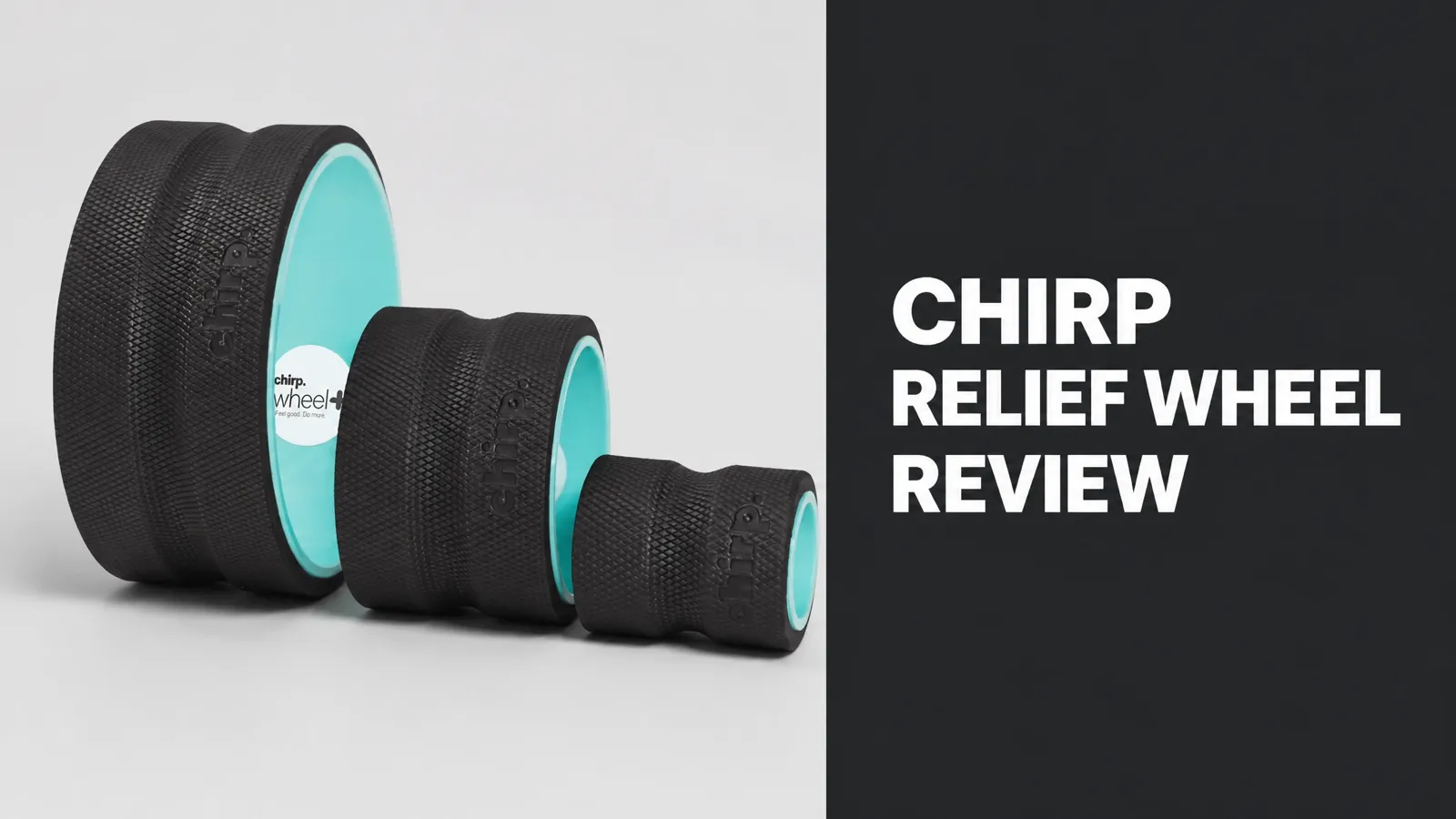
The Chirp Relief Wheel is a curved, foam-padded wheel built for spinal decompression and back stretching. Chirp designed it to match the spine's natural arch. That shape delivers targeted, gentle pressure relief for people stuck sitting at desks for hours each day.
Mechanical pressure drives its relief effect along the spine. Reviewers report real back pain reduction, better posture, and easier movement after desk work. Complaints focus on durability in smaller sizes and price versus generic wheels. Independent testers like Innerbody Research found no major safety concerns when used as directed.
Pregnant users and people with spinal hardware should get medical clearance first, according to Chirp's own guidance. The sections ahead break down pricing, sizes, safety, and whether the Chirp Wheel earns its place in a real recovery routine built around lasting results.
What Is the Chirp Wheel?
The Chirp Wheel is a padded foam-wrapped wheel built for spinal decompression and back stretching. Riders roll their spine along the curved surface while gravity and body weight create gentle, targeted pressure.
Chirp, the company behind the wheel, is based in Utah and reports more than 13,000 verified customer ratings on its product line. The brand sells the wheel in single units, multi-packs, and a motorized Pro version.
The design traces back to yoga wheel exercises. Chirp reshaped that concept into a dedicated recovery tool. Physical therapists now reference similar wheel-rolling motions in spinal mobility routines.
How Does the Chirp Wheel Work?
Mechanical pressure drives the Chirp Wheel's relief effect along the full length of the spine. Users lie back over the wheel, let their shoulders and hips drop toward the floor, and roll slowly forward and backward.
The curve matches the natural arch of the spine (the thoracic and lumbar curve). This shape spreads pressure evenly instead of concentrating it on one vertebra. Foam padding cushions direct bone contact.
So what actually loosens up? Repeated sessions stretch the surrounding fascia and muscle tissue. This process can loosen tight spots built up from sitting or standing for long stretches. Daily use builds flexibility over several weeks.
What Are the Chirp Wheel's Features?
Closed-cell foam padding wraps every Chirp Wheel to cushion the spine during use. A rigid plastic core underneath keeps the wheel's shape stable even under full body weight.
The surface texture includes raised nodes on some models. These nodes add a deeper massage-like pressure point, similar to a foam roller with ridges. Flat-surface versions exist for users who want gentler pressure.
A non-slip base coating keeps the wheel from sliding on hardwood or tile floors. Chirp also includes an online video library with guided stretch routines for new buyers.
What Sizes Does the Chirp Wheel Come In?
Four diameters make up the Chirp Wheel lineup: 4 inch, 6 inch, 10 inch, and 12 inch. Each size targets a different depth of stretch and a different body type.
The 10 inch wheel suits most first-time buyers. It offers a moderate stretch without forcing the spine into an extreme arch. Taller users often prefer the 12 inch for a deeper range.
The 4 inch and 6 inch wheels work best for targeted muscle release in the upper back and shoulders. Chirp sells a 3-pack bundling the 10 inch, 6 inch, and 4 inch sizes together for $99.99.
What Are the Benefits of the Chirp Wheel?
Spinal decompression sits at the center of every benefit claim Chirp makes about the wheel. Daily rolling sessions stretch compressed discs and loosen the muscles that pull the spine out of alignment.
Reported benefits extend beyond the back. Users describe improved posture, better core engagement, and easier movement after sitting at a desk for hours. The company markets the wheel for both recovery and everyday mobility work.
Main Benefits:
- Reduced lower and upper back pain
- Improved posture and spinal mobility
- Stronger core and stabilizing muscles
- Better sleep quality for nightly users
- Faster recovery after workouts
Chirp also lists improved sleep quality and faster workout recovery among customer-reported outcomes. These benefits track closely with general myofascial release research, not with Chirp-specific clinical trials.
Does the Chirp Wheel Actually Relieve Back Pain?
Yes. Thousands of customer reviews cite reduced lower and upper back pain after regular Chirp Wheel use. The stretch targets the same muscle groups that tighten from prolonged sitting.
Relief tends to build gradually rather than appear after one session. Most reviewers report noticeable change within one to two weeks of daily five-to-ten-minute sessions.
The wheel does not treat structural spine conditions like herniated discs on its own. It functions as a stretching and mobility aid, not a substitute for physical therapy or medical treatment.
Does the Chirp Wheel Improve Posture?
Yes. Reviewers frequently connect regular use to standing taller and sitting with less forward-head slump. The backward arch stretch directly counters the rounded posture common after desk work.
Core engagement plays a role too. Balancing over the wheel activates stabilizing muscles along the spine. Stronger stabilizers support better posture outside of active stretching sessions.
Results vary by how consistently someone uses the wheel. Occasional use produces milder posture gains than a daily five-minute routine built into a morning or evening habit.
What Do Chirp Wheel Reviews Say?
Customer sentiment leans strongly positive across the roughly 13,000 ratings Chirp has collected. Independent review sites like Innerbody Research back this up with their own hands-on testing notes.
Reviewers most often praise the immediate stretch relief and the wheel's sturdy build quality. Several describe it as a cheaper, more effective alternative to in-person massage therapy for everyday tightness.
Pros:
- Immediate stretch relief for many first-time users
- Spine-matched curve not found on generic wheels
- Durable closed-cell foam on larger sizes
- Guided video library included with purchase
Cons:
- Smaller wheels report cracking after months of use
- Priced above generic yoga wheel alternatives
- Initial stretch can feel intense for beginners
And it's not all praise. Criticism centers on price and durability for the smaller wheel sizes. A portion of reviewers report cracks forming in the smaller models after a few months of heavy use.
What Positive Experiences Do Buyers Report?
Immediate back relief tops the list of praise in verified Chirp Wheel reviews. Buyers describe audible pops and a loosening sensation similar to a chiropractic adjustment during their first session.
Several reviewers highlight improved sleep after adding the wheel to a nightly routine. Others note it travels well. It fits easily into a gym bag or suitcase for use on the road.
Long-term users report the stretch habit sticking better than foam rolling alone. The guided shape makes correct form easier for people without physical therapy experience.
What Common Complaints Appear?
What's the biggest complaint? Cracking in the smaller wheels drives most negative reviews. One customer reported their small Chirp Wheel cracked after roughly two months of regular use. That prompted a replacement request to Chirp support.
Price comparisons to generic yoga wheels on Amazon show up often. Some reviewers question paying $89.99 or more for a 3-pack when unbranded versions sell for under $30.
A smaller group of reviewers found the stretch too intense on first use. Chirp recommends starting with the largest wheel size to ease into the motion gradually.
Chirp Wheel vs Generic Foam Rollers and Yoga Wheels?
Table: Chirp Wheel vs Alternatives
| Product | Price Range | Padding | Spine-Specific Curve |
|---|---|---|---|
| Chirp Wheel 3-Pack | $89.99-$99.99 | Closed-cell foam | Yes |
| Chirp Wheel Pro | $99.99 | Closed-cell foam | Yes, motorized |
| Generic yoga wheel | $20-$35 | Thin foam or none | No, flat wheel |
| Standard foam roller | $15-$40 | Firm foam cylinder | No, straight cylinder |
Here's why it costs more: the spine-matched curve separates the Chirp Wheel from a standard yoga wheel or foam roller. Generic wheels use a flat cylindrical shape that does not track the natural lumbar and thoracic arch.
Build quality explains much of the price gap. Chirp's closed-cell foam resists compression over time better than the thinner padding found on many budget wheels sold on Amazon and other marketplaces.
Buyers prioritizing price alone often choose generic wheels first. Buyers targeting a specific spinal stretch pattern, with a curve engineered for that purpose, tend to choose the Chirp Wheel instead.
What Are the Side Effects of the Chirp Wheel?
Mild soreness follows a first Chirp Wheel session for many new users, similar to the day after a deep massage. This soreness typically fades within a day or two as the body adjusts.
Overextending the backward arch too quickly can strain neck or shoulder muscles. Chirp's own guidance recommends starting with the largest wheel and shortest session length to avoid this.
Possible Side Effects:
- Mild soreness after the first few sessions
- Neck or shoulder strain from overextending too fast
- Discomfort for users with spinal hardware
Users with existing spinal hardware or recent back surgery report discomfort when attempting standard poses. Chirp's support team recommends medical clearance before use in these situations.
Who Should Avoid the Chirp Wheel?
Pregnant users top the list of groups Chirp advises against using the wheel without medical clearance first. The backward spinal arch position is not recommended during pregnancy.
People with osteoporosis, recent spinal fractures, or spinal fusion hardware face added risk from the compression and arch motion. A doctor's clearance is the safer starting point for these groups.
One reviewer asked whether scoliosis made the wheel unsafe. Chirp's support team recommends a physical therapist consultation first, since curve severity varies widely between individuals.
Is the Chirp Wheel Safe and Legit?
Yes. Chirp operates as an established company with a verified review program, a working customer support line, and a track record spanning several years in the recovery product market.
Independent reviewers, including Innerbody Research, tested the wheel directly. They found no major safety concerns when used as directed. The closed-cell foam and plastic core hold up under normal body weight.
Legitimacy concerns mostly center on counterfeit or knockoff wheels sold by third-party Amazon sellers. Buying directly from Chirp's site or an authorized retailer avoids that risk entirely.
How Much Does the Chirp Wheel Cost?
Pricing:
- Single 10 inch wheel: around $45-$55
- 3-Pack (10 inch, 6 inch, 4 inch): $99.99
- 4-Pack (12 inch, 10 inch, 6 inch, 4 inch): $120
- Chirp Wheel Pro (motorized): $99.99
Does that premium pay off? Chirp prices its wheels above most generic competitors on Amazon. The 3-pack bundle at $99.99 covers the three most commonly used sizes for a typical new buyer's routine.
Seasonal sales and bundle discounts appear regularly on Chirp's own site. Third-party resellers sometimes list the Chirp Wheel Pro for as low as $50, though stock and warranty coverage vary by seller.
Accessories add to total cost. Chirp Clouds, a softer cushion attachment, run $59.99, and the companion Stretch Mat adds another $79.99 for buyers who want the full setup.
Is the Chirp Wheel Worth the Price?
Yes. The spine-matched curve, durable foam, and guided routine library justify the premium over a generic wheel for buyers who plan to use it consistently. Verified reviews back this conclusion in bulk.
Occasional users who want a single stretching session now and then may find a cheaper generic wheel sufficient. The price gap matters less for buyers replacing regular massage or chiropractic visits.
Durability complaints on the smaller sizes slightly dent the value case. Buyers planning heavy daily use should weigh the 3-pack's warranty terms before committing to the full bundle.
Where Can You Buy the Chirp Wheel?
Chirp's own website remains the most reliable place to buy the wheel with full warranty coverage and verified authenticity. Direct purchases also unlock bundle pricing on multi-packs.
Amazon carries both Chirp-authorized listings and third-party resellers. Checking the seller name before purchase avoids knockoff wheels that copy Chirp's shape without matching its foam quality.
Select retail partners and wellness stores occasionally stock the wheel in person. Buying in-store lets shoppers test the curve and padding firsthand before committing to a size.
Why Should You Try Optimal Weight Plan?
Back pain and poor posture slow down every fitness goal, and tools like the Chirp Wheel only solve part of the puzzle. Our team at Optimal Weight Plan builds complete plans that pair mobility work with real nutrition and movement strategy.
Your coaches track progress, adjust your plan as your body changes, and keep you accountable between sessions. That's the support a foam wheel alone can't give you.
Ready to stop guessing and start a plan built around your actual body? Reach out to Optimal Weight Plan today and let our coaches map out your next step.