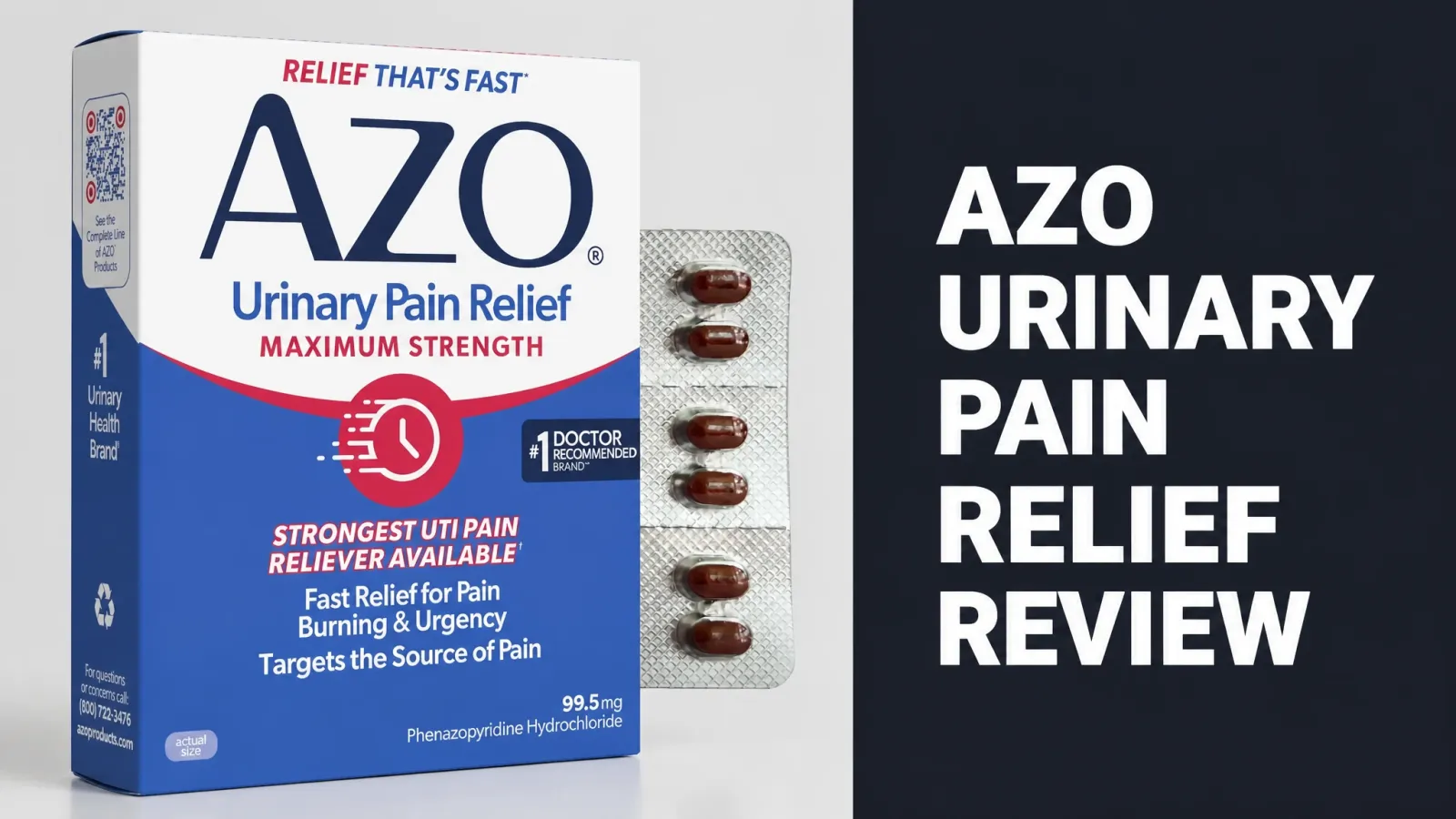
What Is Azo Urinary Pain Relief?
Azo Urinary Pain Relief is a nonprescription urinary tract analgesic built around phenazopyridine hydrochloride. The active ingredient numbs the lining of the urinary tract instead of curing the underlying infection.
The tablet contains 95 mg or 97.5 mg of phenazopyridine hydrochloride, depending on the strength selected. Azo markets Standard, Maximum Strength, and combination formulas alongside this core analgesic.
Manufacturers position Azo as a symptom-relief bridge, not an antibiotic. Consumers pair it with a prescription treatment to knock out the bacterial infection itself.
Who Makes Azo Urinary Pain Relief?
i-Health, Inc. manufactures the Azo product line under license from Church & Dwight's consumer health division. The brand has sold urinary-health products in U.S. pharmacies for decades.
Azo expanded from a single pain-relief tablet into a full urinary and vaginal health portfolio. Cranberry supplements, UTI test strips, and probiotic chews now sit alongside the original pain formula on store shelves.
What Conditions Does It Target?
Azo Urinary Pain Relief targets dysuria, interstitial cystitis, and general urinary tract irritation. Reviewers on Drugs.com log an average condition-specific rating of 4.8 out of 10 for both dysuria and interstitial cystitis.
Urologists commonly recommend the product as a stopgap for UTI-related burning while patients wait for antibiotics or a doctor's appointment. Users with chronic interstitial cystitis report mixed results, with some finding steady relief and others no improvement at all.
How Does Azo Urinary Pain Relief Work?
Phenazopyridine acts as a local anesthetic on the urinary tract lining rather than fighting bacteria. This mechanism explains why Azo eases pain without curing an infection.
The compound is an azo dye, and this chemistry produces its signature side effect. Urine turns orange or red within hours of the first dose, a harmless but startling change.
Phenazopyridine reaches the bladder lining through the urinary tract after absorption. This localized numbing effect is the reason relief often begins within 20 to 60 minutes of swallowing a tablet.
Does Azo Cure Infections?
No. Azo Urinary Pain Relief does not treat or cure a urinary tract infection. The tablet masks pain signals while leaving the underlying bacteria untouched.
Multiple reviewers describe pairing Azo with a prescribed antibiotic, using the tablet purely for comfort during the first days of treatment. Doctors echo this same pairing in patient guidance.
Long-term reliance on Azo without antibiotics allows an infection to progress. This risk is the core reason labels cap use at two days without medical supervision.
What Are the Ingredients in Azo Urinary Pain Relief?
The core formula lists phenazopyridine hydrochloride as the sole active ingredient at 95 mg or 97.5 mg per tablet. Inactive ingredients vary slightly by formula and strength.
Some Azo combination products add methenamine as an antibacterial agent alongside phenazopyridine or sodium salicylate. Methenamine works by acidifying urine, which slows bacterial growth in the urinary tract.
Sodium salicylate, found in certain Azo blends, is a nonsteroidal anti-inflammatory compound. Parents should avoid giving these salicylate-containing formulas to children or teens recovering from chickenpox or flu symptoms.
Key Ingredients:
- Phenazopyridine hydrochloride (95-97.5 mg) — the urinary analgesic
- Methenamine — antibacterial agent in select combination formulas
- Sodium salicylate — anti-inflammatory in select combination formulas
Are the Ingredients Vegan and Allergen-Free?
Azo lists its tablets as free from gluten, dairy, and lactose across its core urinary pain relief line. The brand also markets several formulas as vegan.
Consumers with dye sensitivities should note phenazopyridine itself is an azo dye compound. This detail matters for anyone with known reactions to synthetic dyes in medication.
What Are the Benefits of Azo Urinary Pain Relief?
Azo Urinary Pain Relief delivers fast, targeted relief from urinary burning, urgency, and pain without a prescription. Reviewers consistently cite speed as the product's biggest strength.
Several reviewers report relief within 20 to 60 minutes of the first dose. One reviewer described feeling 90% better within 30 minutes during a severe UTI flare.
Accessibility ranks as a second major benefit. Azo sits on pharmacy shelves nationwide, letting sufferers treat pain overnight or on weekends before a doctor's office opens.
Main Benefits:
- Fast-acting pain relief, often within an hour
- No prescription required
- Widely available at pharmacies and grocery stores
- Reduces urgency and frequency alongside pain
Does Azo Actually Reduce Pain?
Yes. The majority of reviewers report a real drop in burning and urgency after taking Azo, particularly during acute UTI flares. Multiple reviews describe the tablets as a "lifesaver" during nighttime or weekend flare-ups.
One reviewer described a kidney stone stent removal where narcotics barely helped, but Azo brought pain relief within 20 minutes. This kind of acute-pain testimonial appears repeatedly across retailer review sections.
Results vary by condition severity. Reviewers managing chronic interstitial cystitis report more inconsistent outcomes than those treating a standard UTI flare.
Does Azo Help With Interstitial Cystitis?
Results split sharply for interstitial cystitis sufferers. Some long-term IC patients report Azo Max reduces spasms and burning meaningfully during flares.
Other reviewers with severe autoimmune interstitial cystitis report Azo does little against daily pain. One reviewer rated the product a 1 out of 10 after finding it worsened frequency and pain.
What Do Azo Urinary Pain Relief Reviews Say?
Customer reviews skew positive on retail sites, averaging 3.9 out of 5 stars on major bundle listings. Drugs.com reviewers rate the product lower, at 5.6 out of 10, reflecting a more clinically focused audience.
Retail reviewers frequently praise speed and convenience, calling Azo a "godsend" for nighttime UTI pain. Several reviewers specifically credit the maximum strength formula with stopping symptoms before a doctor's visit.
Clinical-focused reviewers on Drugs.com report a wider mix of outcomes, including several serious adverse reactions. This split suggests satisfaction depends heavily on the condition being treated.
What Do Positive Reviews Highlight?
Positive reviewers highlight speed, convenience, and relief from nighttime symptoms. One reviewer with lupus called Azo "wonderful to have available off the shelf" for recurring UTIs.
Reviewers managing menopause-related UTI symptoms report frequent, reliable relief from the maximum strength formula. Several describe keeping a box on hand at all times for flare-ups.
What Do Negative Reviews Report?
Negative reviewers report nausea, vomiting, and stomach pain as the most common complaints. Several users describe gastrointestinal symptoms lasting up to three days after finishing a course.
A smaller group of reviewers report more serious reactions. One reviewer described dangerously low oxygen levels and blood pressure spikes requiring hospitalization after taking Azo during an active infection.
Pros:
- Fast relief from burning and urgency
- Convenient, no-prescription access
- Strong reviews for acute UTI flares
Cons:
- Nausea and stomach upset reported by multiple users
- Inconsistent results for chronic interstitial cystitis
- Rare but serious reactions reported
Azo vs Pyridium vs Uristat: Which Is Better?
Azo, Pyridium, and Uristat all rely on the same active ingredient, phenazopyridine, making effectiveness nearly identical. The real differences come down to price, availability, and formula strength.
Pyridium is the prescription-strength original, typically dosed higher and requiring a doctor's order. Azo and Uristat are the over-the-counter generics, sold in similar 95-97.5 mg doses.
Uristat markets itself as a direct generic alternative at a lower price point than Azo's branded packaging. Reviewers report comparable relief across all three, since the active compound never changes.
Brand Comparison:
| Product | Type | Typical Price |
|---|---|---|
| Azo Urinary Pain Relief | OTC | $10.99-$19.99 |
| Uristat | OTC generic | $8-$15 |
| Pyridium | Prescription | Varies by insurance |
What Are the Side Effects of Azo Urinary Pain Relief?
Azo Urinary Pain Relief commonly causes orange or red urine, nausea, and stomach upset during normal use. These effects stem directly from phenazopyridine's dye-based chemistry.
Several reviewers report the color change stains underwear, bedsheets, and even soft contact lenses. Taking tablets with food can reduce the stomach upset some users experience.
Rare but serious reactions include low oxygen saturation, blood pressure spikes, and reduced red blood cell counts with extended use. These reactions appear concentrated among reviewers who took Azo beyond the labeled two-day limit.
Common Side Effects:
- Orange or red urine discoloration
- Nausea, vomiting, or stomach pain
- Headache or dizziness in some users
- Staining of clothing or contact lenses
Who Should Avoid Azo Urinary Pain Relief?
People with G6PD deficiency should avoid phenazopyridine without medical guidance. This enzyme deficiency raises the risk of red blood cell breakdown from the compound.
Anyone with kidney disease or known dye and preservative allergies should consult a doctor before starting Azo. Children and teens recovering from chickenpox or flu symptoms should avoid salicylate-containing Azo formulas due to Reye's syndrome risk.
Is Long-Term Use of Azo Safe?
No. Labels and doctors both warn against using Azo beyond two consecutive days without medical supervision. Extended use is linked to reduced red blood cell counts and, in rare cases, intestinal tumors.
Reviewers who reported the most serious side effects, including hospitalization, had extended their use well past the recommended window. This pattern reinforces why Azo works as a short bridge, not a long-term solution.
Is Azo Urinary Pain Relief FDA Approved and Legit?
Yes. Phenazopyridine is an FDA-monitored over-the-counter ingredient, and Azo sells its products through licensed retailers like CVS, Walmart, and Sam's Club nationwide. The brand markets itself as the #1 doctor-recommended urinary health brand.
Azo has operated in the OTC urinary health category for decades, with consistent retail distribution and consumer recognition. This track record separates it from unregulated supplement brands making similar claims.
Reviewers across major retailers verify purchases and post photos, adding a layer of transparency to the product's reputation. This visibility, combined with FDA oversight of the active ingredient, supports Azo's legitimacy.
How Much Does Azo Urinary Pain Relief Cost?
Azo Urinary Pain Relief costs between $10.99 and $19.99 depending on tablet count and retailer. Bundle packs with UTI test strips run slightly higher.
CVS lists standard tablet counts around $10.99, while larger 24-count maximum strength boxes and bundles approach $19.99 through the brand's direct site. Sales and multi-buy promotions frequently lower this range at major retailers.
Is Azo Worth the Price?
Yes, for short-term UTI symptom relief, most reviewers consider the price reasonable given the speed of results. A single box typically lasts through one flare-up cycle when used as directed.
Reviewers frequently mention keeping a box on hand for emergencies rather than buying reactively. This stocking pattern suggests most users view the cost as justified insurance against nighttime or weekend flares.
Where to Buy Azo Urinary Pain Relief?
Azo Urinary Pain Relief is sold at CVS, Walmart, Sam's Club, Walgreens, and the brand's own azoproducts.com site. Most major pharmacy chains stock multiple strengths.
The brand's direct site offers free shipping on orders over $30 and subscription savings on orders over $15. This subscription option appeals to reviewers managing recurring UTIs who restock regularly.
Should You Try Optimal Weight Plan?
Urinary pain is often tangled up with bigger metabolic and hormonal patterns. Recurring UTIs, bladder irritation, and inflammation frequently connect to the same root issues our coaches at Optimal Weight Plan help clients tackle every day.
Our experts build personalized plans that look at hydration, nutrition, and lifestyle factors driving inflammation throughout your body. You get more than a quick fix. You get a plan built around your actual health picture.
Don't wait for the next flare-up to take your health seriously. Talk to the Optimal Weight Plan team today and build a plan that keeps you ahead of the pain instead of chasing relief after it hits.