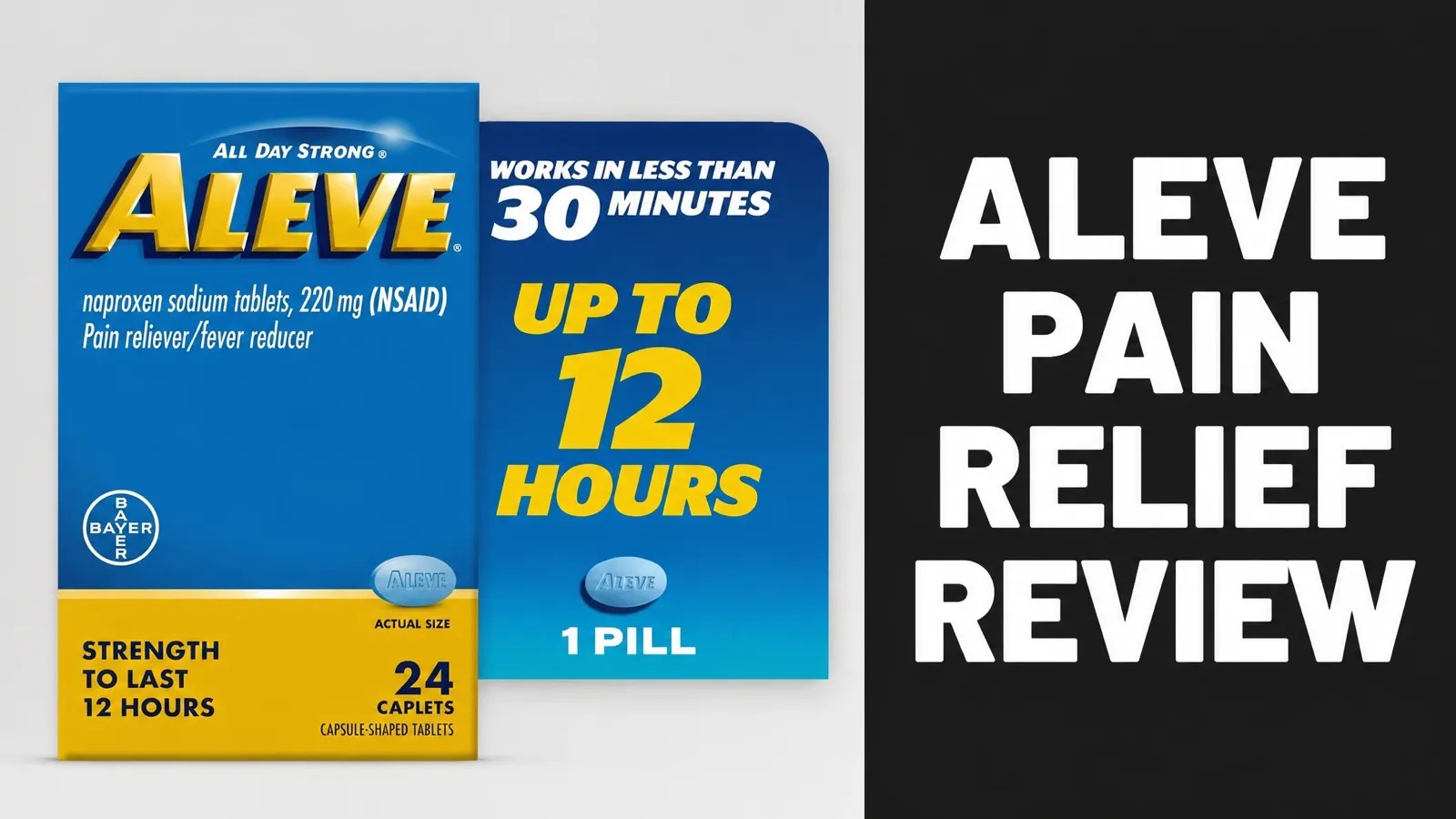
Aleve is an over the counter pain reliever built on naproxen sodium, a non-steroidal anti-inflammatory drug. It targets mild to moderate pain from arthritis, muscle strains, headaches, and menstrual cramps. One dose covers up to twelve hours.
Shoppers want to know whether Aleve beats Advil or Tylenol for lasting relief. Clinical studies show naproxen outperforms acetaminophen for total pain relief over twelve hours. Reviewers report it works especially well for back and joint pain. Some users flag stomach discomfort with regular use. Dosing sits at one caplet every eight to twelve hours, far less often than rival brands.
This review breaks down how naproxen sodium works, what real buyers say about it, and how Aleve stacks up against Advil and Tylenol. Our team at Optimal Weight Plan compared the clinical data, the safety profile, and the price against its closest competitors. Read on before you reach for a bottle.
What Is Aleve Pain Relief?
Aleve is a non-steroidal anti-inflammatory drug sold over the counter for pain and fever. Bayer markets it under the naproxen sodium formula at 220 milligrams per caplet. The brand targets musculoskeletal, dental, and menstrual pain specifically.
Aleve treats arthritis pain, muscle aches, backaches, and menstrual cramps. Orthopedists often recommend naproxen for sports injuries and gout flares. The twelve-hour window sets it apart from shorter-acting pain relievers on the same shelf.
What Conditions Does Aleve Treat?
Aleve treats mild to moderate pain and reduces fever. Common uses include arthritis, back pain, muscle soreness, toothaches, and menstrual cramps. It does not treat severe or chronic pain conditions without a doctor's guidance. Long-term arthritis management should include a physician's input beyond over the counter dosing.
How Does Aleve Work?
Aleve blocks the body's production of prostaglandins, the chemicals that drive pain and inflammation. Naproxen sodium acts as a non-selective COX inhibitor. This mechanism reduces both the pain signal and the swelling that often causes it.
The drug reaches peak effect within about an hour of the first dose. Relief then holds for eight to twelve hours per caplet. This extended window lets users dose twice a day instead of every four to six hours like ibuprofen.
What Is Naproxen Sodium?
Naproxen sodium is the active ingredient inside every Aleve caplet, dosed at 220 milligrams. It belongs to the same NSAID family as ibuprofen but clears the body more slowly. That slower clearance explains the longer relief window compared to Advil.
What Are the Benefits of Aleve?
Aleve delivers up to twelve hours of pain relief from a single caplet, cutting daily dosing in half. Clinical trials found naproxen provided greater total pain relief than acetaminophen over a twelve-hour period. Fewer doses per day means fewer chances to forget a scheduled pill.
Orthopedic specialists cite naproxen as a preferred option for arthritis, bursitis, and sports injuries. The anti-inflammatory action addresses swelling directly, not just the pain signal. Reviewers frequently describe it as the strongest option they have tried for back pain.
Key Benefits:
- Up to twelve hours of relief per dose
- Reduces both pain and inflammation
- Fewer daily doses than ibuprofen or acetaminophen
- Approved for adults and children twelve and older
Does Aleve Work Better Than Advil?
Yes, for longer-lasting relief specifically. Aleve holds effect for eight to twelve hours while Advil lasts four to six. Advil kicks in slightly faster, within thirty minutes versus about an hour for Aleve. The better choice depends on whether speed or duration matters more.
Does Aleve Reduce Inflammation?
Yes. Naproxen sodium blocks prostaglandins directly, cutting inflammation at its source. Tylenol offers no meaningful anti-inflammatory effect by comparison. This makes Aleve a stronger pick for arthritis and swelling-related pain specifically.
What Do Aleve Reviews Say?
Aleve earns largely positive reviews from buyers managing chronic back pain, arthritis, and muscle soreness. Repeat purchases show up often in retail review histories. Complaints center mainly on stomach sensitivity with frequent use.
Positive Experiences
Many reviewers say Aleve outperforms every other over the counter pain reliever they tried for back pain. Some report switching from Advil after finding the twelve-hour window more convenient. Long-term arthritis sufferers frequently mention it as their daily go-to. Consistency across purchases builds strong brand loyalty in the reviews.
Common Complaints
The most frequent complaint involves stomach upset, heartburn, or nausea after repeated doses. A smaller group reports the caplets are large and harder to swallow. Some buyers note the price runs higher than generic naproxen sodium. Taking Aleve with food resolves most stomach complaints according to several reviewers.
Aleve vs Advil vs Tylenol
Aleve competes against Advil and Tylenol as the three leading over the counter pain relief brands. Each uses a different active ingredient with its own strengths. Choosing between them depends on the type of pain and how often reapplication is tolerable.
Advil uses ibuprofen, dosed every four to six hours with faster onset. Tylenol uses acetaminophen, effective for fever and headache but with minimal anti-inflammatory power. Aleve's naproxen sits between them, trading a slower start for a longer window of relief.
Aleve vs Advil vs Tylenol:
| Brand | Active Ingredient | Onset | Duration |
|---|---|---|---|
| Aleve | Naproxen sodium 220mg | About 1 hour | 8-12 hours |
| Advil | Ibuprofen 200mg | 30 minutes | 4-6 hours |
| Tylenol | Acetaminophen 325mg | 30-60 minutes | 4-6 hours |
What Are the Side Effects of Aleve?
Aleve causes gastrointestinal side effects most often, a pattern common to every NSAID on the market. Heartburn, indigestion, nausea, and stomach pain top the list. Taking each dose with food reduces the risk significantly.
Less common but more serious effects include stomach bleeding, kidney strain, and elevated blood pressure with long-term use. Anyone on blood thinners or with a history of ulcers should talk to a doctor first. Symptoms like black stool or severe stomach pain need immediate medical attention.
Reported Side Effects:
- Heartburn or indigestion
- Nausea or stomach pain
- Dizziness or headache
- Fluid retention
- Elevated blood pressure with prolonged use
Who Should Avoid Aleve?
Anyone with a history of stomach ulcers or gastrointestinal bleeding should avoid Aleve without medical supervision. People on blood thinners, diuretics, or certain blood pressure medications face increased interaction risk. Pregnant individuals, especially in the third trimester, should avoid NSAIDs entirely. Children under twelve should not take standard-strength Aleve.
Is Aleve FDA Approved and Safe?
Aleve is an FDA-approved over the counter drug manufactured by Bayer under the naproxen sodium monograph. It has decades of clinical use behind the active ingredient across both prescription and OTC strengths. The safety profile matches other widely used NSAIDs.
Long-term daily use carries known cardiovascular and gastrointestinal risks, the same warning that applies across the NSAID class. Short-term, occasional use for typical aches carries a low risk profile. Severe reactions should be reported to the FDA MedWatch program at 1-800-FDA-1088.
How Much Does Aleve Cost?
Aleve typically costs between five and fifteen dollars depending on caplet count and retailer. A 24-count bottle runs close to five dollars at major retailers. Larger bottles bring the per-dose price down for regular users.
Generic naproxen sodium costs less than the Aleve brand name for the identical active ingredient. Advil and Tylenol sit in a similar price range overall. Store brand versions of all three typically undercut the name brand by several dollars per bottle.
Is Aleve Worth the Price?
Yes, for anyone who values fewer daily doses and stronger anti-inflammatory action. The twelve-hour window often justifies the modest premium over ibuprofen products. Generic naproxen sodium delivers the same relief for less, worth comparing before a name-brand purchase.
Where to Buy Aleve?
Aleve ships from Amazon, Walmart, CVS, and most major pharmacy and grocery chains. Physical stores stock it in the pain relief aisle alongside Advil and Tylenol. No prescription is required at checkout. Generic naproxen sodium sits on the same shelf for a direct price comparison.
Why Should You Try Optimal Weight Plan?
Chronic pain and inflammation often trace back to habits a single pill can't fix. Our coaches at Optimal Weight Plan build full wellness plans that address the root causes, not just the symptom of the day.
You get a coordinated approach to nutrition, movement, and recovery, not just another bottle in the cabinet. Better mobility and lower systemic inflammation come from consistent daily habits, and our team at Optimal Weight Plan builds a plan around exactly that instead of a single dose.
Ready for a plan built to last? Book a free call with our coaches and pair pain relief with a program that targets the cause.